Topical Guide
Best European Food Markets: 18 Must-Visit Markets for Travellers Who Eat
Europe's food markets are the fastest, cheapest, and most enjoyable way to understand a country. This guide walks through 18 of the most worthwhile markets across the continent — from Barcelona and Lisbon to Istanbul and Oslo — with practical details on opening hours, what to eat, and how to time your visit.
Europe's food markets are not just shopping — they are a fast-track to understanding a place. Long before a city's museums or its monuments tell you what a culture values, a single morning at a market will: how people eat, what they grow, what they trade with their neighbours, which traditions have survived two centuries of industrialisation and which have not. This guide walks through 18 of the most worthwhile food markets across the continent, from the obvious headline acts (Barcelona's La Boqueria, London's Borough Market) to the under-the-radar regional markets that reveal more about daily life in a country than any guidebook can. None of these are comprehensive — that would take a book, not an article — but every one of them is worth building a trip around.
This list favours markets that are still working markets first and tourist markets second. A market that exists primarily to sell flowers, fruit, cheese, and fish to local residents, and only incidentally to charm visitors, is the kind of place where the food is better, the prices are saner, and the experience is more real. Where a market is past its prime or has tipped too far into tourism, I have noted that too — and pointed you somewhere better.
What Makes a Great European Food Market?
A great market is, first, functional. The best food markets in Europe are still the social and commercial heart of their neighbourhood: pensioners doing the weekly shop, chefs buying produce for the evening service, families stopping for a paper cone of mussels or a slice of cake. They are not staged for tourists, even when tourists are welcome. A market that opens at 6am and closes by 2pm is a market for the neighbourhood; a market that opens at 10am and closes at 11pm is, usually, a market for the visitors. Both have a place — but if you want to see how a city actually eats, you want the first kind.
A great market is also a product of its region. The covered market halls of Budapest, the souks of Istanbul, the great iron-and-glass Victorian markets of the United Kingdom, the Mediterranean open-air markets of southern France and Italy — each of these is a different architectural and commercial form, evolved over centuries. A morning at one teaches you a lot about the agricultural, climatic, and historical reality of the country. A morning at two, very different markets within the same country, teaches you even more.
Finally, a great market is still evolving. The best European markets today are not frozen in time. Many now host permanent cooking schools, sit-down restaurants built around the stalls, and curated evening events. The best combine the freshness of a working market with the convenience of a modern food hall — and stay affordable for the people who actually live there.
The Markets
1. La Boqueria, Barcelona, Spain
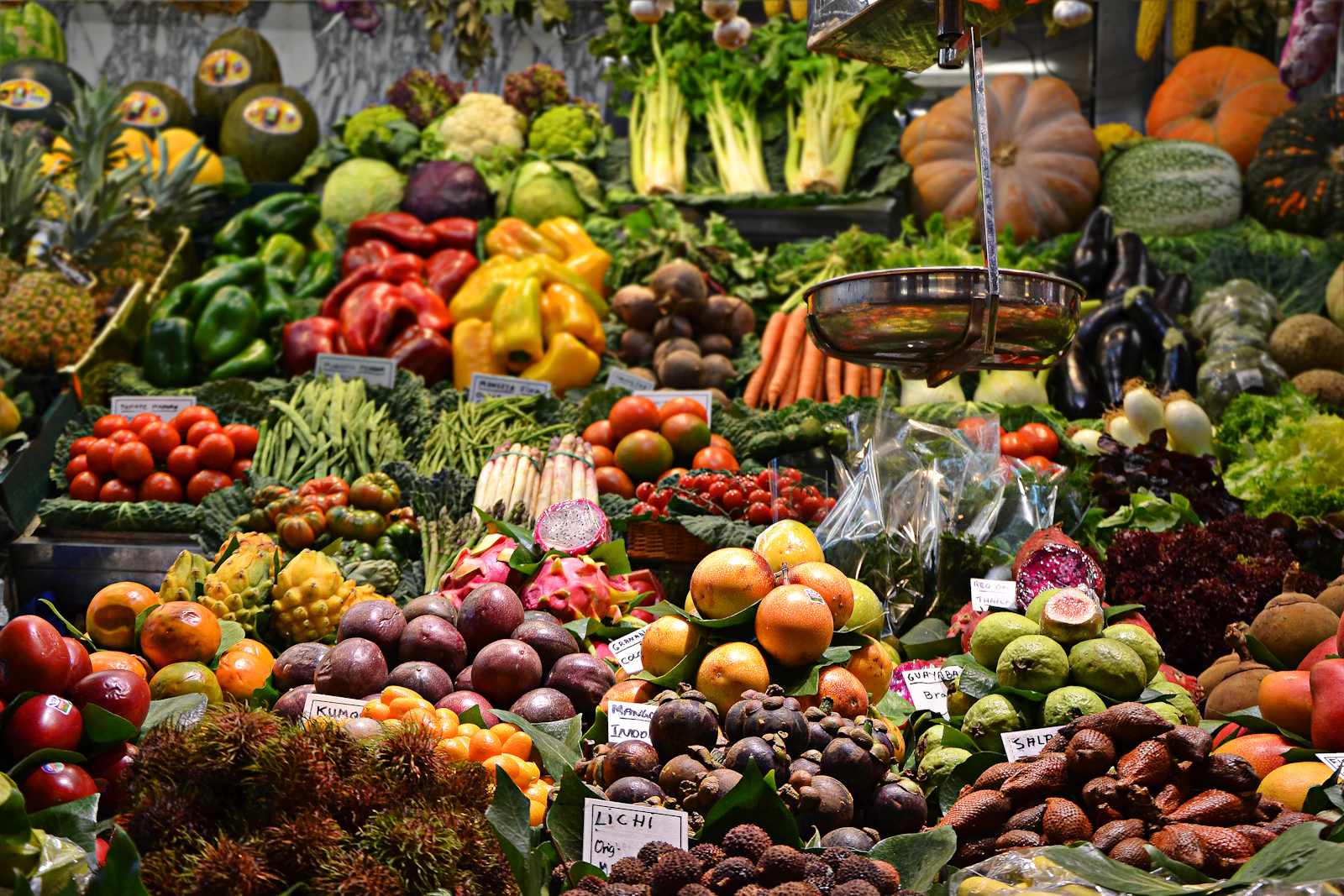
The textbook European food market and still, in 2026, one of the most spectacular anywhere. La Boqueria sits on La Rambla in Barcelona and has been a market on this site since the 13th century, with the current iron-and-glass Modernista structure dating to 1914. Open Monday to Saturday, 8am to 8.30pm (closed Sundays). It is busy — extremely busy — but the produce stands at the back of the hall and the seafood counters facing the central aisle are the real draw. Go before 10am to avoid the worst of the cruise-ship day-trippers. Eat at one of the in-market bars: El Quim de la Boqueria, on the central aisle, is the famous one. See our full Barcelona guide for the rest of the city.
2. Mercado de San Miguel, Madrid, Spain
A 1916 iron-and-glass market hall a five-minute walk from Plaza Mayor, restored in 2009 as a gourmet tapas market. San Miguel is a step up from the everyday Mercado de la Cebada or Mercado de Antón Martín, both of which are better if you want a real working market, but if you want the curated, wine-and-iberico experience, San Miguel is the place. Open Sunday to Wednesday 10am to midnight, Thursday to Saturday 10am to 1am — and the late hours are deliberate. The standing-room-only atmosphere at midnight on a Saturday is the whole point. See our Madrid guide for neighbourhood-by-neighbourhood coverage.
3. Mercado da Ribeira (Time Out Market), Lisbon, Portugal
The 1882 iron market hall in the Cais do Sodré neighbourhood, half still a working market for Lisbon residents, half now home to the Time Out Market Lisboa — a curated food hall with 30+ chef-driven stalls and restaurants. The market is the cleanest example in Europe of a working market and a chef-driven food hall coexisting, and the result is one of the best food experiences on the continent. The chef stalls are not cheap by Lisbon standards (€15-25 a dish), but the quality is exceptional. See our Lisbon guide.
4. Mercado dos Lavradores, Funchal, Madeira, Portugal
The famous flower, fruit, and fish market in the centre of Funchal. The market is not large, but the stalls are extraordinary — workers in traditional Madeira dress weave the flower arrangements, and the produce on display is tropical and temperate at the same time: passion fruit, custard apples, Madeira wine, black scabbardfish, tuna. Best on a Saturday morning when the farmers come down from the mountains. Our Madeira coverage is in the Portugal guide, but the flight from Lisbon is under two hours and worth the detour.
5. Borough Market, London, United Kingdom
London's most famous food market, on the south bank of the Thames near London Bridge, has been a market on this site for at least 1,000 years. The current market is partly open-air (Thursday to Saturday) and partly under the railway arches (full-time shops and restaurants). Borough has become the high-water mark of the UK food-market revival, and the produce on display is exceptional — British cheese, cured meats, single-origin chocolates, fresh oysters, sourdough. It is also expensive and very busy. Go on a Thursday morning for the best of the wholesale trade and the fewest crowds. See our London guide for the rest of the city's markets.
6. Marché d'Aligre, Paris, France
The best-kept secret in Paris markets — twelve covered pavilions of fruit, vegetables, fish, cheese, and meat in the 12th arrondissement, open Tuesday to Sunday 7.30am to 1.30pm, with the surrounding Beauvau outdoor market filling the same hours. It is a real Parisian market — middle-class families doing their weekly shop, chefs from the surrounding restaurants buying their produce — and it is far less crowded than the headline Bastille or Marché des Enfants Rouges markets. The cheese stalls alone are worth the trip. See our Paris guide.
7. Marché des Enfants Rouges, Paris, France
The oldest covered market in Paris, founded in 1615, in the Marais. It is small — only about 20 stalls — and has tipped hard into the prepared-food direction over the past decade, with Moroccan, Lebanese, Japanese, and Italian stalls serving lunch. The food is excellent. The atmosphere is what you would expect of a Marais lunch spot on a Saturday. Go early, around noon, for the best selection. See our Paris guide.
8. Forville Market, Cannes, France
The morning produce market in Cannes is, frankly, a rebuke to anyone who thinks the French Riviera is only about glamour. Open every morning except Monday, in the Marché Forville covered hall, it is a working Provençal market — olives, anchovies, melons, lavender, the lot — with a few good prepared-food stalls for lunch. The market spills outside into the surrounding square on Saturdays. Combine it with a morning walk up to Le Suquet for the view over the bay. The Côte d'Azur is covered in our Nice guide and our Provence coverage.
9. Mercato Centrale, Florence, Italy
The ground floor of Florence's 1874 iron-and-glass central market is still a working market — produce, fish, cheese, cured meats, fresh pasta. The upstairs, opened in 2014, is now a curated food hall with chef-driven stalls serving traditional Tuscan food at lunch and dinner. The market is a 10-minute walk from the Duomo, and the upstairs is one of the best lunch stops in central Florence. See our Florence guide.
10. Mercato di Rialto, Venice, Italy
The produce and fish market on the Grand Canal in Venice, near the Rialto Bridge, has been a market on this site since the 11th century. It is open Monday to Saturday, 7.30am to 1pm, and it is the last remaining functioning market in central Venice — the surrounding neighbourhood has lost almost all of its working population to short-term lets, but the market survives. Go early, before 9am, for the best of the lagoon fish. The produce is mostly from the surrounding Veneto and from the islands of the lagoon. See our Venice guide.
11. Mercato di Porta Palazzo, Turin, Italy
The largest outdoor market in Europe, in the square behind Turin's Porta Palazzo. Twice a week, the square fills with several hundred stalls of produce, cheese, meat, fish, and household goods, surrounded by a permanent covered market hall (the 1834 building) and the open-air Balon flea market. The market is genuinely multicultural — Italian, North African, Chinese, Senegalese — and is one of the most interesting places in the city to see how Turin actually eats. Saturday is the biggest market day.
12. Viktualienmarkt, Munich, Germany
Munich's famous daily food market in the old town has been running on this site since 1807. About 100 stalls in a permanent open-air setting, plus the traditional beer garden in the centre of the market. The market is small, well-curated, and has the feel of a permanent farmers' market — fruit, vegetables, cheese, fish, flowers, baked goods, and the famous Bavarian sausages. Open Monday to Saturday 8am to 6pm. See our Munich guide.
13. Naschmarkt, Vienna, Austria
Vienna's most famous market, a 1.5km-long strip between the city centre and the river. Open Monday to Friday 6am to 7pm, Saturday 6am to 6pm. The market dates to the 16th century and is a mix of permanent stalls (cheese, fish, produce, antipasti, Austrian and Italian restaurants) and the Saturday flea market that fills the eastern end of the strip. The Saturday market is one of the best in Central Europe. See our Vienna guide.
14. Central Market Hall (Nagyvásárcsarnok), Budapest, Hungary
The largest and oldest of Budapest's great covered market halls, built in 1897 in a neo-Gothic style at the end of Váci Street. The ground floor is produce, meat, fish, cheese, paprika, and pálinka. The upper floor is the prepared food — langos, goulash, stuffed cabbage, lángos, kürtőskalács chimney cake. The market is open Monday to Saturday 6am to 5pm, Sunday 6am to 3pm, and it is genuinely affordable — a full lunch upstairs is €5-8. See our Budapest guide.
15. Mercado da Ribeira and Bolhão Markets, Porto, Portugal
The Bolhão Market is the traditional Porto produce market — a cast-iron 1914 building on the Praça de Mouzinho de Albuquerque, recently restored and reopened in 2022. The market is a real working market for Porto residents: produce, fish, cheese, bread, the lot, plus a few prepared-food stalls and restaurants on the ground floor and in the basement. The current market is, in 2026, one of the best in Europe — the restoration respected the original building, and the mix of small producers and traditional stalls is the right balance. See our Porto guide.
16. Östermalmshallen, Stockholm, Sweden
The 1889 Art Nouveau market hall on Östermalmstorg, restored and reopened in 2020. The market is small, expensive, and beautiful — a curated selection of the best Swedish and Nordic produce, fish, cheese, meat, and baked goods, with a few in-market restaurants. The market is open Monday to Friday 9.30am to 6pm, Saturday 9.30am to 4pm, Sunday 11am to 4pm. It is not the cheapest market in Stockholm, but it is the most beautiful, and the food is excellent. See our Stockholm guide.
17. Mathallen, Oslo, Norway
The 1908 industrial building in the Vulkan neighbourhood, restored as a food hall in 2012. Mathallen is the high-water mark of the Scandinavian food-hall trend — about 30 stalls of Norwegian and international artisan food, plus a few sit-down restaurants, in a beautiful industrial space. The market is a great introduction to the new Norwegian food culture: small-producer cheese, cured fish, sourdough, craft beer. It is expensive by any standard except Oslo's. See our Oslo guide.
18. Kadıköy Market, Istanbul, Turkey
The Asian-side market on the Marmara coast is, in many ways, the most interesting food market in Istanbul — and far less touristy than the Spice Bazaar in the historic centre. The market is a real working market for the Asian side's residents: produce, fish (including fresh bonito and mackerel from the Bosphorus), cheese, olives, pickles, Turkish delight, dried fruit, and a vast array of prepared food. Best on a Tuesday or Friday, the main market days. The surrounding streets of Kadıköy are a food destination in their own right — ciğer (liver) restaurants, kokoreç (offal sandwich) stalls, kumpir (loaded baked potato), and Turkish breakfast places. See our Istanbul guide.
Practical Notes for Travelling Around European Food Markets
Timing: Most European food markets open early (6-8am) and close early (1-3pm) for the produce and fish halls. The food-hall versions (Mercado de San Miguel, Mercato Centrale Florence upstairs, Mathallen Oslo) keep longer hours and often into the evening. If you want the real thing — the farmers, the chefs, the seasonal produce — go in the morning. If you want the sit-down version, go at lunch or dinner.
Season: Markets are year-round, but the produce changes with the season. Spring is the time for fresh peas, broad beans, asparagus, strawberries, and the first tomatoes. Summer is the explosion — stone fruit, tomatoes, peppers, melons, fresh figs. Autumn is the harvest — grapes, apples, pears, mushrooms, truffles, walnuts. Winter is preserved — cheese, cured meats, dried beans, citrus from the Mediterranean. The fun of travelling market to market is the seasonal variation.
How to Eat Your Way Around: A morning at a market, with a coffee and a pastry, then a single plate of something at one of the in-market stalls for lunch, is a better food experience than any restaurant in the city. Most markets have a few prepared-food stalls that are better than the surrounding restaurants. Eat where the locals queue. Avoid the stalls with the most visible marketing — the best stalls are usually the ones with the longest lines of local pensioners.
Packing and Bringing Things Home: Most produce will not survive a long flight home, but cheese, cured meat, dried pasta, olive oil, honey, dried mushrooms, salt, and a few carefully wrapped fresh items (a wedge of Comté, a stick of chorizo, a bottle of olive oil) are the kind of thing to bring back. Most markets will vacuum-pack and ship. Some countries have restrictions on bringing in fresh produce, fresh meat, or fresh dairy — check before you buy.
Internal Travel: Almost every market on this list is reachable by public transport. Some (Porto, Lisbon, Vienna) are within walking distance of the old town. Others (Mathallen Oslo, Kadıköy Istanbul) require a tram or a ferry. Driving is rarely a good idea — most central-city markets have limited or expensive parking. Plan to walk, take the metro, or take a taxi.
Common Thread
What ties these markets together is that they are still local. The cheese stall in Borough Market is run by the same family that has been making the cheese for three generations. The fish counter at the Rialto is selling fish from the lagoon, caught the night before. The produce stand at Naschmarkt is selling what the Austrian farms delivered that morning. The food hall at the Mathallen is run by the small producers who invented the new Norwegian food culture. The European food market — in all its forms, from the open-air Provençal market to the iron-and-glass Central European hall to the Scandinavian food hall — is the closest the continent has to a universal civic institution. It is also the easiest, cheapest, and most enjoyable way to eat well in Europe. Go to one, go to several, and build your trip around them.
Best Time to Visit European Food Markets
The single biggest variable in market quality is the time of year, and the second is the time of week. Markets are open year-round, but they peak in spring and autumn — the two shoulder seasons where the produce is at its most varied and the crowds are at their thinnest. April through May is the start of the southern European market year: strawberries and asparagus appear, the first tomatoes of the season come onto the stalls at La Boqueria and Mercato di Rialto, and the Provençal markets in Forville and the Cours Saleya in Nice come alive with the first melons and cherries. September and October are the harvest: grapes, apples, pears, walnuts, chestnuts, mushrooms (porcini and chanterelles appear at the Italian, French, and Austrian stalls in volume), and the first of the new-season olive oil from Tuscany, Liguria, and Provence. The summer months of July and August are busy and glorious in the south, but the southern European markets lose their working character in August as locals leave for holiday — you will still find the stalls open, but many of the regular vendors take a two-week break. Winter is the season of preserved foods: cheese, cured meats, dried beans, citrus from Sicily and Andalusia, and the famous Christmas markets of Vienna, Budapest, Prague, Strasbourg, and Munich that run from late November through Christmas Eve.
The time of week matters as much as the time of year. Saturday is the biggest market day at almost every market on this list — the farmers come down from the surrounding countryside, the fish is freshest, the produce is at its broadest, and many markets add flea-market stalls alongside the food. The Saturday versions of Bolhão in Porto, Viktualienmarkt in Munich, Forville in Cannes, and the Naschmarkt in Vienna are the best of the week. Sunday is the worst day for most traditional produce and fish markets (closed) but the best day for the curated food halls (San Miguel, Mercato Centrale upstairs, Mathallen, Time Out Market) which operate on a hospitality-week rhythm. Monday is the second-worst — many working markets are closed, and those that are open are running reduced stalls. Tuesday through Friday is the sweet spot for a real working market: open for business, lively without being crushed, the produce from two or three days ago replenished.
The time of day matters too. Most working markets open between 6 and 8am and close between 1 and 3pm. The first hour — 7 to 8am — is the chefs' hour: the best produce is on the stalls, the fishmongers are laying out the morning's catch, and the regulars are doing the weekly shop. The second hour — 8 to 9am — is the best window for visitors who want to see a market at full working character without the worst of the crowds. After 10am, the produce is still good, the fish is still on the stall, but the chefs are gone and the lunch crowd is starting to arrive. The food-hall versions (San Miguel, Mercato Centrale upstairs, Mathallen, Time Out Market) operate on a different rhythm: they open at 10am or later and stay open through lunch and dinner, often until 11pm or midnight. Plan your morning around the working market and your evening around the food hall.
A Seasonal Calendar of European Food Markets
The same market in February and in August will look like two different places. Here is a month-by-month guide to what is at its peak when, so you can plan a trip around the produce you most want to eat.
January-February: Citrus from Sicily and Andalusia dominates the southern markets — blood oranges, lemons, clementines. The northern markets are quieter but the cured meats and aged cheese are at their best after a winter of maturing. Truffles are at peak — the white truffle of Alba in Piedmont and the black truffle of Périgord in southwest France. The Christmas markets have closed, but the après-ski markets in the Alps (Courchevel, Megève, Innsbruck) are at their busiest.
March-April: The first asparagus appears at the Austrian and German stalls — the white asparagus of March in Munich's Viktualienmarkt is the seasonal marker. The first strawberries from Huelva in southern Spain appear at the end of March. Easter markets open in Italy, Spain, and Greece for Holy Week, with the traditional Easter breads, lamb, and chocolate eggs. The Provençal markets come alive with the first peas, broad beans, and artichokes.
May-June: The first tomatoes of the season arrive at La Boqueria and the Italian markets in late May — the San Marzano harvest at Mercato di Rialto is the marker. Cherries, apricots, and the first peaches appear in the southern markets. The strawberry peak is May in central Europe and June in northern Europe. The first cherries from Provence and Puglia appear in June. The Greek markets add the first of the new-season feta and the first of the summer stone fruit.
July-August: The explosion. Tomatoes, peppers, aubergines, courgettes, melons, figs, stone fruit — peaches, nectarines, plums — are all in season in the southern markets. The Italian markets at their absolute peak in late July and August. The Greek markets are at their busiest with the summer tourists. The Provençal markets are crowded and glorious but many of the regular vendors take a two-week break in August. The northern markets (Mathallen, Östermalmshallen, Borough) add the first of the summer berries — raspberries, blueberries, red currants — and the first of the new-crop potatoes.
September-October: The harvest. Grapes, apples, pears, walnuts, chestnuts, mushrooms (porcini, chanterelles, oyster mushrooms at the Italian, French, Austrian, and Swiss stalls). The first of the new-season olive oil from Tuscany, Liguria, and Provence — usually pressed in October and on the stalls by November. Truffles return — the white truffle of Alba is at its peak from mid-October to mid-December. The autumn figs at the Provençal markets are the best of the year.
November-December: Citrus returns to the southern stalls. The cured meats and aged cheese reach their winter peak. The Christmas markets of Vienna, Budapest, Prague, Strasbourg, Munich, Cologne, Basel, Zürich, Aachen, Dresden, Nuremberg, and Brussels open in late November and run through Christmas Eve. The markets of the Alps (Innsbruck, Salzburg, Bolzano) are at their most atmospheric in December. The Scandinavian markets shift indoors — the Christmas version of Mathallen Oslo, Östermalmshallen Stockholm, and Torvehallerne Copenhagen are warm, well-stocked, and at their winter best.
Market Etiquette and Practical Customs
A little etiquette goes a long way at a European market. These are the unwritten rules that locals follow and visitors notice.
Don't touch the produce unless invited. In most continental markets, the vendor selects the produce for you — you ask for the quantity you want and the vendor picks. Pointing is fine. Touching individual pieces, especially fruit, is not — it bruises the produce and signals that you are not a regular. In the UK and Ireland, the convention is the opposite: pick up the fruit, examine it, hand it back if you do not want it. Watch what the locals do for ten seconds before you buy.
Bring your own bag. Most European markets will not give you a bag unless you ask, and when they do it is a thin plastic produce bag that may not survive the trip home. A reusable cotton or mesh bag in your daypack solves this. For cheese, cured meat, and fish, ask the vendor to vacuum-pack if you are flying that day or taking a long train ride — most will do it for a small fee.
Know the numbers. In continental markets, prices are by the kilogram (€/kg) and the vendor will weigh your purchase and tell you the price before you pay. In the UK, prices are often by the item (each) or by the pound. In the US-style markets (some Italian and Austrian stalls) prices may be per 100g. Ask if you are unsure — a quick "is that per kilo?" will save you a surprise at the till.
Have small notes and coins ready. Many small stalls will not break a €50 or €100 note, especially early in the morning. €5, €10, and €20 notes plus coins are the right currency for a market morning. Card payments are increasingly common but still secondary at the smaller stalls.
Try before you buy — but ask first. Most market vendors will offer you a taste of the cheese, olive oil, cured meat, or fruit they are selling. In southern Europe this is expected; in northern Europe and the UK it is less universal. If the vendor does not offer, it is fine to ask for a small taste before committing to a €30 wedge of aged pecorino. If they decline, accept it and move on.
Eat where the locals queue. The best in-market prepared-food stalls are almost always the ones with the longest line of pensioners and chefs on their lunch break. Avoid the stalls with the most visible marketing, the most aggressive calling-out to tourists, and the ones nearest the main entrance — these are the most touristy and almost never the best. Walk to the back of the market; the best stalls are nearly always at the back.
Time your visit for the morning. The first two hours of a working market are the best — the produce is freshest, the fish is just laid out, the regulars are doing the weekly shop, and the chefs are buying for the evening service. By lunchtime, the working market is winding down and the food-hall stalls are filling up. By 2pm, the produce and fish stalls are largely closed. By 6pm, the food halls are at their evening peak.
Don't photograph the vendors without asking. This is a real and growing concern at European markets. Most vendors are happy to be asked, and many will pose for a photo if you buy something first. A quick "may I take a photo?" in the local language (or English) goes a long way. Photographing without asking is increasingly unwelcome, and a few markets (especially in France and Italy) have explicit no-photography rules for the produce stalls. The food-hall and restaurant stalls are generally fine to photograph freely.
Tip lightly and with grace. Market etiquette on tipping is simpler than restaurant etiquette. At a produce or cheese stall, rounding up to the nearest euro is sufficient. At a prepared-food stall or in-market restaurant, 5-10% is appropriate if you are happy with the service. Tipping is not expected at most continental markets, and an exaggerated tip can be awkward — a simple "thank you" in the local language is often more appreciated than the money.
Frequently Asked Questions
What is the best food market in Europe? There is no single answer — it depends on what you want. For the headline spectacle, La Boqueria in Barcelona, Borough Market in London, and the Central Market Hall in Budapest are the most famous. For the most authentic working market, the Marché d'Aligre in Paris, the Mercato di Porta Palazzo in Turin, and the Kadıköy Market in Istanbul are better choices. The right market depends on whether you want a curated experience, a working market, or a sit-down food-hall version.
Are European food markets open every day? No. Most traditional produce and fish markets close on Sundays, and many close on Mondays as well. The covered market halls of central Europe (Budapest, Vienna, Munich) tend to be open six or seven days a week. The food-hall versions (Mercado de San Miguel, Mercato Centrale Florence upstairs, Mathallen Oslo) are usually open seven days a week, often into the evening. The Saturday markets (Bolhão Porto, Viktualienmarkt Munich) are bigger than the weekday version and worth timing your visit around.
Can I eat my way around European food markets on a budget? Yes, with planning. The most affordable food markets for a meal are the working markets with prepared-food stalls: the Central Market Hall in Budapest (€5-8 for a full lunch), Kadıköy in Istanbul, Marché d'Aligre in Paris, Mercato di Rialto in Venice, and the Mercado da Ribeira in Porto. The curated food-hall versions (San Miguel, Mathallen, Mercato Centrale upstairs) are more expensive, typically €15-25 per dish. The most expensive market in Europe is probably Viktualienmarkt in Munich or Östermalmshallen in Stockholm; the cheapest in the western part of the continent is Kadıköy.
Which European food markets are best for a quick visit (under an hour)? Mercato di Rialto in Venice, Marché des Enfants Rouges in Paris, Mercato Centrale Florence (ground floor), and the Naschmarkt in Vienna are all walkable in under an hour. The very large markets (Porta Palazzo in Turin, La Boqueria at peak hours, Borough Market on a Saturday) need at least 90 minutes to two hours to be enjoyed properly. The food-hall versions (Mercado de San Miguel, Mercato Centrale upstairs, Mathallen) are also a quick visit and pair well with a city walk.
Do I need to speak the local language to enjoy a food market in Europe? No, but it helps. Most market vendors in major cities speak some English, German, French, or Spanish. Pointing, smiling, and indicating the amount you want (in weight or count) is enough. Learning the local words for please, thank you, and the names of a few key products goes a long way. Markets are also the most forgiving environment for non-fluent speakers — the food is the conversation, and the vendors appreciate the effort.
When is the best season to visit European food markets? Markets are open year-round, and the character shifts dramatically with the calendar. Spring (April-May) brings asparagus, peas, strawberries, and the first tomatoes. Summer (June-August) is the explosion of stone fruit, peppers, melons, figs, and tomatoes. Autumn (September-November) is the harvest — grapes, apples, pears, mushrooms, truffles, walnuts, and game. Winter (December-March) is the season of preserved foods — cheese, cured meat, citrus, dried beans, and the famous Christmas markets of Central Europe. The same market in February and in August will look like two different places.
Are European food markets cash-only? It depends on the country and the stall. Scandinavian markets (Mathallen Oslo, Östermalmshallen Stockholm) and the curated food halls (Mercato Centrale Florence upstairs, Mercado de San Miguel, Time Out Market Lisbon) take cards almost everywhere. The traditional working markets in southern Europe (Borough Market London, Mercado da Ribeira, Mercato di Rialto, Marché d'Aligre Paris) increasingly take cards but many small stalls still prefer cash, especially for under €10 purchases. Bring €20-50 in small notes and coins for a market morning; it speeds things up and avoids the awkward 'card minimum is €15' situation at some stalls.
Which European food markets are best for families with children? The most family-friendly markets are the ones that combine a sit-down food experience with stalls you can browse at child pace. The top picks are the Mercado da Ribeira / Time Out Market in Lisbon (30+ chef stalls, every cuisine, takeaway seating), the Central Market Hall in Budapest (langos, chimney cake, paprika — the kids will eat for €5), the Mercato Centrale in Florence (the upstairs food hall has pasta, pizza, and gelato within a single floor), and Kadıköy in Istanbul (sweets, simit, freshly squeezed pomegranate juice). The very large outdoor markets (Porta Palazzo in Turin, La Boqueria at peak hours) are harder with small children because of the crowds. Markets with a permanent covered structure (Viktualienmarkt Munich, Bolhão Porto) are easier with a stroller than open-air Provençal markets with cobblestones.
Can I bring European cheese, cured meat, or olive oil back through customs? Yes, with limits. Within the EU there are no customs restrictions on cheese, cured meat, olive oil, or other prepared foods for personal consumption. Travelling from the EU to the UK, US, Canada, or Australia, hard cheese and cured meat are usually allowed in reasonable personal quantities (typically 2-3 kg per person); soft cheese and fresh meat are restricted. Olive oil, sealed honey, dried pasta, dried mushrooms, and packaged chocolate are almost universally fine. Vacuum-packing and a printed receipt help at customs. Always check the specific country rules before you fly — the UK and US are stricter than Australia and Canada, and Turkey and the Balkans have their own restrictions at the land border.
Which European markets are worth a special trip beyond the city? Three markets are worth a deliberate detour from the city centre. The Mercado dos Lavradores in Funchal, Madeira is a flight from Lisbon (under two hours) and combines the market with the island's dramatic landscapes and levada walks. The Bolhão Market in Porto is a short train ride from Lisbon (under three hours) and is the best traditional market in Portugal after the 2022 restoration. The Rialto Market in Venice is reachable by train from Padua, Treviso, or Vicenza in under an hour, and pairs the market with the lagoon. Within a single city, the most worthwhile single-market trips from the centre are Kadıköy in Istanbul (a 20-minute ferry from the historic peninsula) and Mathallen in Oslo (a 10-minute walk from the Royal Palace).