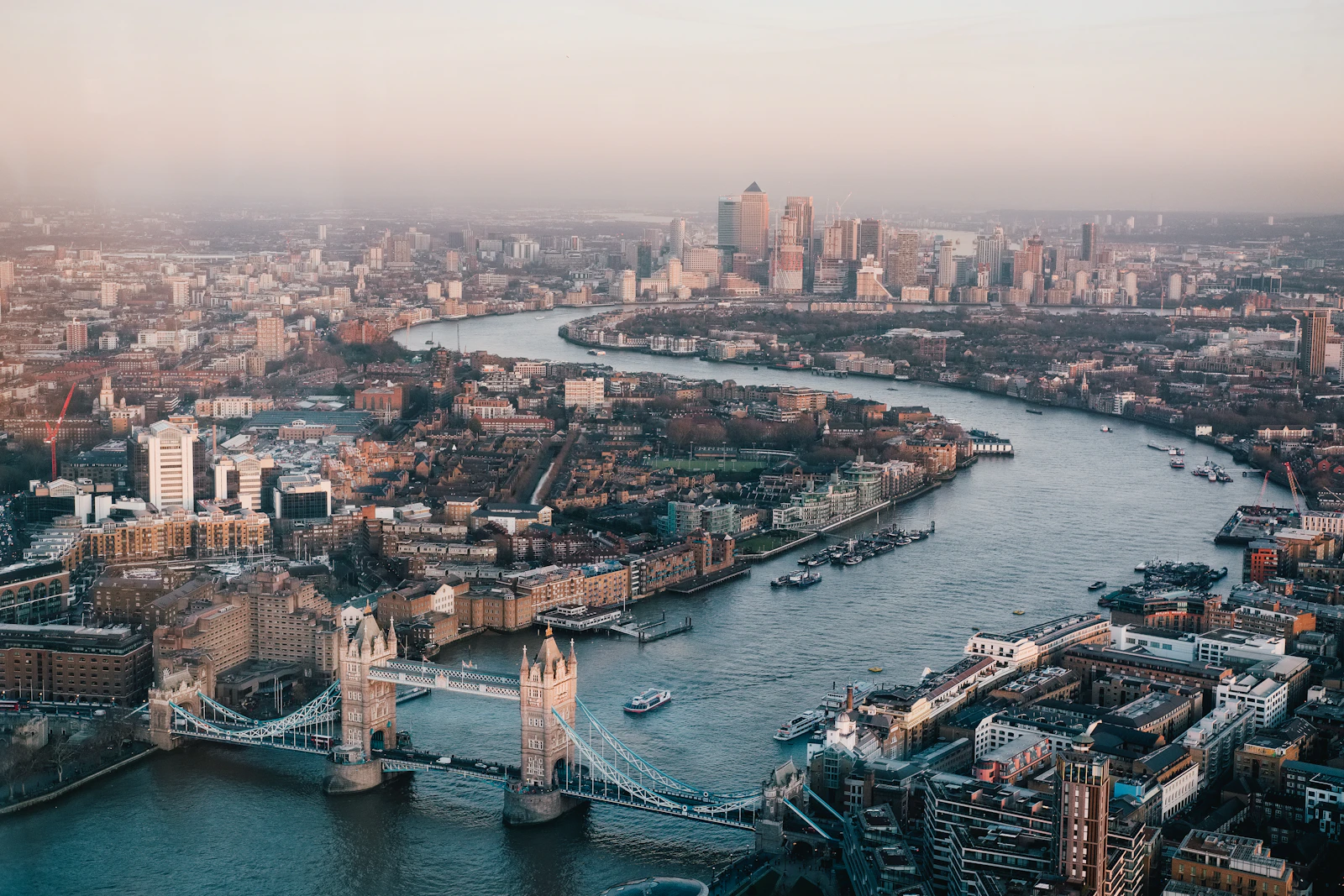
London, United Kingdom
No other European city works on as many registers as London. It is a financial capital, a parliamentary capital, a cultural capital, a fashion capital, and a food capital, often all in the same morning. It is also a city of villages — a patchwork of distinct neighbourhoods stitched together by the Underground, the river, and the green spaces of the royal parks. You can stand in the ruins of a Roman wall in the City, walk five minutes east and eat Sichuan food in a curry-house basement, walk five minutes north and be in a Georgian square that has barely changed since Jane Austen, walk five minutes south and be on the South Bank watching the same Thames that Shakespeare's audiences watched. London rewards both the first-time visitor and the tenth-time visitor: there is always a new neighbourhood, a new restaurant, a new exhibition, a new show.
This guide is for travellers who want to experience London as a city to live in for a few days, not as a checklist of monuments. It covers where to stay (from the great Mayfair hotels to East End design hotels and reliable hostels), where to eat (from the rules of formal British dining to the curry mile and the modern food markets), what to see (the iconic sights and the less obvious ones), and how to structure a 2-3 day visit that does not feel like a forced march.
Best Places to Stay
London's accommodation is famously expensive at the top end and surprisingly affordable at the budget end. The most central neighbourhoods — Mayfair, Marylebone, Covent Garden, the City — are the most expensive. South Bank, King's Cross, Shoreditch, and the edges of Bloomsbury are cheaper and well connected. Where you stay will shape your London: a Mayfair base means walking past the Royal Academy on the way to dinner, while a Shoreditch base means a different city entirely — one of late-night curry houses, art galleries, and design hotels.
Mayfair and St. James's: The most prestigious central address, between Hyde Park and Piccadilly, with the best of London's grand hotels. The Savoy (Strand) is the city's most storied grand hotel, opened in 1889, facing the Thames with its famous art-deco river entrance. Claridge's (Brook Street) is the discreet Mayfair institution, an art-deco masterpiece that has hosted every head of state and Hollywood star of the last century. The Ritz London (Piccadilly) is the gilded Louis-XVI fantasy that almost defines the word "luxury," with its famous afternoon tea in the marble Palm Court. The Connaught (Carlos Place) is the contemporary Mayfair choice, with a David Collins–designed interior and a small but excellent spa.
Marylebone and Fitzrovia: The most pleasant central neighbourhood, a grid of Georgian and Victorian streets north of Oxford Street, with some of the city's best restaurants and the Wallace Collection. The Marylebone Hotel (Welbeck Street) is a contemporary luxury hotel in a converted townhouse. The Langham (Portland Place) is the grande dame of Marylebone, opened in 1865 and recently restored. The Mandeville Hotel (Mandeville Place) is a smaller, friendlier luxury option. The Grazing Goat (New Quebec Street) is a gastropub-with-rooms that captures the village feel of the area.
Covent Garden, Holborn, and Bloomsbury: The theatre and museum heart of the city. The Bloomsbury Hotel (Bloomsbury Square) is a 19th-century building overlooking a private garden. The Hoxton, Holborn (199-206 High Holborn) is a design hotel in a former car park, with a ground-floor restaurant and a lobby that doubles as a workspace. The Rosewood (High Holborn) is one of London's newest grand hotels, in a converted Pearl Assurance building. Radisson Blu Edwardian, Mercer Street (Monmouth Street) is a reliable mid-range option steps from Covent Garden.
South Bank, Bankside, and Borough: The riverside neighbourhood across the Thames from the City, dominated by the Tate Modern, the Globe, and the South Bank Centre. The Shard (London Bridge Street) houses the Shangri-La Hotel on floors 34-52, with floor-to-ceiling views over the city. The Hilton London Bankside (Hopton Street) is a contemporary hotel near the Tate Modern. Premier Inn London County Hall (Belvedere Road) is a clean budget option with unbeatable views of the Eye and Parliament. The Mad Hatter Hotel (Stamford Street) is a South Bank gastropub-with-rooms.
Shoreditch, Spitalfields, and the East End: The creative heart of contemporary London, with the best of the city's restaurants, bars, and street art. The Standard, London (10 Argyle Street, King's Cross) is the design hotel that put the Standard on the map in Europe, in a converted brutalist office building opposite St Pancras. The Hoxton, Shoreditch (81 Great Eastern Street) is the original East End design hotel, with a lobby that is essentially a public living room. Andaz Liverpool Street (1 Liverpool Street) is a Hyatt concept in a 19th-century railway hotel. The Z Hotel Shoreditch (Old Street) is a compact budget-design option. Ace Hotel London Shoreditch (100 Shoreditch High Street) is the East London outpost of the Ace group, with a working-studio feel.
Notting Hill, Kensington, and Chelsea: The leafier west London neighbourhoods, near Hyde Park and the museum district. The Kensington Hotel (Queen's Gate) is a small luxury hotel near the V&A and the Natural History Museum. The Pelham Hotel (Cromwell Road) is a townhouse hotel with the feel of staying in a stylish friend's home. Number Sixteen (Sumner Place) is a Firmdale Hotels townhouse with a beautiful private garden. The Ampersand Hotel (Harrington Gardens) is a design hotel with a small spa and a bar that has become a South Kensington institution. Premier Inn London Kensington (Earl's Court) is a clean budget option in the heart of the museum district.
Budget: London is not a cheap city for hotels, but a strong network of hostels, capsule hotels, and budget chains keeps things accessible. YHA London St Pancras (Euston Road) is a reliable independent hostel. Wombat's City Hostel London (7 Dock Street, Whitechapel) is a design hostel that is one of the best-rated in Europe. Generator London (37 Tavistock Place) is a large, well-run hostel near Russell Square. Premier Inn County Hall and Premier Inn London City (Tower Hill) are both clean, predictable, and central. Astor Hyde Park Hostel (191 Queensgate) is a small hostel in a beautiful South Kensington townhouse. Apartment rentals through the usual platforms are also plentiful in Kensington, Notting Hill, and Bloomsbury, often at hotel-comparable prices for stays of three nights or more.
Best Places to Eat
London is one of the great food cities of the world, in large part because every wave of immigration has left a distinct culinary fingerprint. The Indian restaurants of Brick Lane and Southall, the Bangladeshi restaurants of Whitechapel, the Turkish restaurants of Stoke Newington, the Lebanese restaurants of Edgware Road, the Chinese restaurants of Chinatown, the Japanese restaurants of Soho, the West African restaurants of Peckham and Brixton, the Italian restaurants of Clerkenwell — each of these is a small food destination in its own right, and most are still very affordable. The formal British dining scene is also at its peak, with a wave of talented young chefs reimagining the country's culinary inheritance. Add the city's food markets, the new generation of food halls, and the afternoon-tea tradition, and London is a place where you could eat a different cuisine three times a day for a month without repeating.
Fine Dining: The capital of modern British fine dining is Restaurant Gordon Ramsay (68 Royal Hospital Road, Chelsea), the three-Michelin-starred flagship of the most famous chef in Britain, still operating at the highest level after more than two decades. Core by Clare Smyth (92 Kensington Park Road, Notting Hill) is the three-star restaurant of Ramsay's former head chef, with the kind of seasonal British menu that has made her the most decorated female chef in the country. Alain Ducasse at The Dorchester (Park Lane) is the London outpost of the French master, holding three Michelin stars for its haute-cuisine tasting menu. Hélène Darroze at The Connaught (Carlos Place, Mayfair) is the two-star restaurant of the French-Basque chef, with one of the most beautiful dining rooms in the city. The Ledbury (127 Ledbury Road, Notting Hill) is the two-star restaurant of Brett Graham, a quiet Australian chef in a Notting Hill townhouse. Sketch (9 Conduit Street, Mayfair) is the multi-room Mayfair institution with the famous pink Gallery dining room and the Lecture Room library holding two Michelin stars.
Traditional British: The classic London dining room is now rarer than it used to be, but a handful of institutions keep the tradition alive. Rules (35 Maiden Lane, Covent Garden) is the oldest restaurant in London, established in 1798, famous for its game cookery and its upstairs pie-and-mash room. The Wolseley (160 Piccadilly) is the grand brasserie in a former car showroom, modelled on a Viennese coffeehouse and still one of the most reliably good restaurants in the centre. Wiltons (55 Jermyn Street) is the Jermyn Street institution famous for its oysters, game, and traditional British dishes. Hawksmoor (various locations) is the steak-restaurant group that did as much as anyone to revive the British steakhouse. Brasserie Zédel (20 Sherwood Street) is the enormous French brasserie in a former ballroom off Piccadilly, with the kind of value-for-money that makes the rest of central London look overpriced.
Indian and South Asian: London has the best Indian food outside South Asia, and the choices are wide. Dishoom (various locations, with the original at 7 Boundary Street, Shoreditch) is the Bombay-café-inspired restaurant that has done more than any other to make Indian food fashionable in London. Gymkhana (42 Albemarle Street, Mayfair) is the two-Michelin-starred fine-dining Indian restaurant of the Sethi family, with one of the most beautiful dining rooms in the city. Tayyabs (83-89 Fieldgate Street, Whitechapel) is the legendary Punjabi grill, an East End institution that has not changed in decades. Veeraswamy (99-101 Regent Street) is the oldest Indian restaurant in Britain, opened in 1926, on the upper floor of a Regent Street building. Brilliant Restaurant (72-76 Western Road, Southall) is the Southall destination for Punjabi and Gujarati cooking. Trishna (15-17 Blandford Street, Marylebone) is the Marylebone sister of Gymkhana, a more accessible modern-Indian restaurant.
Street Food and Markets: London's street-food scene is one of the best in the world, anchored by a handful of permanent markets and a long list of weekend markets. Borough Market (8 Southwark Street) is the most famous food market in the country, operating since at least the 18th century, with permanent stalls and traders in the surrounding streets. Camden Market (Camden Lock Place) is the sprawling Camden market complex, with food stalls representing almost every world cuisine. Brick Lane is the Sunday-up market street with curry houses, bagel shops (the Beigel Bake brick-lane bagel is an institution, open 24 hours), and vintage clothing. Maltby Street Market (Maltby Street, Bermondsey) is the smaller, foodie Saturday market in a railway-arch setting. Mercato Metropolitano (42 Newington Causeway, Elephant and Castle) is the Italian-inspired covered market with stalls, restaurants, and a small cinema. Seven Dials Market (Earlham Street, Covent Garden) is the Covent Garden food hall with a strong rotation of traders. Netil Market (Westgate Street, London Fields) is the East London Saturday market.
Afternoon Tea: The afternoon-tea tradition is a London institution, and the best of them are still properly formal. The Ritz London (Piccadilly) is the most famous, served in the Palm Court with a string quartet and strict dress code. Fortnum & Mason (181 Piccadilly) is the Piccadilly institution with multiple tea rooms. Claridge's (Brook Street) is the discreet Mayfair version. The Wolseley (160 Piccadilly) is the grand-cafe option, less formal but equally beautiful. Sketch (9 Conduit Street) is the most contemporary take, with a Gallery afternoon tea that doubles as art. Brown's Hotel (33 Albemarle Street) is the oldest hotel in London and the place where afternoon tea is said to have been invented in the 1840s.
Pubs for Food: The London gastropub has been one of the city's great food-revolution stories. The French House (49 Dean Street, Soho) is the Soho institution for a half-bottle and a plate of charcuterie. The Anchor & Hope (36 The Cut, Southwark) is the original gastropub in the railway arches of Waterloo. The Harwood Arms (27 Walham Grove, Fulham) is the only Michelin-starred pub in London, with a small but excellent seasonal menu. The Guinea (30 Bruton Place, Mayfair) is the Mayfair pub famous for its grilled steaks and kidney pies. The Marksman (254 Hackney Road) is the Hackney pub that has done more than any other to define the modern London pub menu.
Best Sites to Visit
London's central concentration of sights is unusual among European capitals — almost every major attraction is within the Square Mile, the West End, the South Bank, or South Kensington, and the public transport system is good enough to keep walking between them to a minimum.
The Tower of London and Tower Bridge: The Tower of London (Tower Hill) is the 1,000-year-old fortress on the north bank of the Thames, founded by William the Conqueror in 1066 and used as a royal palace, a prison, a treasury, and a menagerie over the centuries. The Crown Jewels are the most visited part of the collection, with the Imperial State Crown, the Sovereign's Orb, and the world's largest cut diamond. The Yeoman Warders (Beefeaters) give excellent free tours. The ravens are the famous resident birds — legend says that if they ever leave, the kingdom will fall. The White Tower in the centre is the original Norman keep, housing the Royal Armouries collection. Plan at least three hours, and book tickets online to avoid the long queues. Tower Bridge (Tower Bridge Road) is the Victorian bascule bridge right next to the Tower, with a glass-floored high-level walkway 42 metres above the river. The combined Tower + Bridge experience is one of the essential London half-days.
The British Museum: The British Museum (Great Russell Street, Bloomsbury) is one of the world's great museums and, like the Tate and the National Gallery, is free to enter. The collection is encyclopaedic, founded in 1753 around Sir Hans Sloane's bequest and now containing more than eight million objects from every continent. The most visited galleries are the Egyptian (Rosetta Stone, mummies, the colossal bust of Ramesses II), the Greek (the Parthenon sculptures, the Nereid Monument), the Assyrian (the Lion Hunt of Ashurbanipal, the Black Obelisk of Shalmaneser III), and the Rosetta Stone Room (Room 4). The Great Court with its glass roof is one of the most beautiful interior spaces in London. Plan at least three hours; the museum rewards multiple visits. The new Portable Antiquities Scheme display in Room 2 is the right place to start if you want context for the contested objects.
The National Gallery and the National Portrait Gallery: Two grand galleries in Trafalgar Square, both free. The National Gallery (Trafalgar Square) holds the national collection of Western European paintings from the 13th to the 19th century, with a dense, walkable layout that makes it possible to see the highlights in a few hours. The must-see rooms include the Sistine Madonna by Raphael, the Arnolfini Portrait by van Eyck, the Sunflowers by van Gogh, the Bathers at Asnières by Seurat, the Rokeby Venus by Velázquez, the Hay Wain by Constable, and the Fighting Temeraire by Turner. The National Portrait Gallery (St Martin's Place) is the collection of portraits of historically significant Britons, with the famous Chandos portrait of Shakespeare, the Tudor portraits, the Brontë sisters by Branwell, and the contemporary rooms that reach all the way to the modern royals.
The Tate Modern and the South Bank: The Tate Modern (Bankside) is the national collection of modern and contemporary art, housed in the former Bankside Power Station, with a vast central hall (the Turbine Hall) that has hosted spectacular installations by artists from Louise Bourgeois to Ai Weiwei to Olafur Eliasson. The permanent collection is arranged thematically and includes major works by Picasso, Rothko, Dalí, Warhol, Bacon, Hockney, and Louise Bourgeois. The viewing platform on the 10th floor has one of the best free views in London. After the Tate, walk along the South Bank to the Globe Theatre (Shakespeare's Globe, 21 New Globe Walk) — a faithful reconstruction of the original Elizabethan playhouse, with daytime tours and an annual season of Shakespeare plays performed as they would have been in 1600. Continue west to the South Bank Centre (Belvedere Road), with its three concert halls, the Royal Festival Hall, the Hayward Gallery, and the brutalist cultural complex that has shaped the South Bank since 1951.
Westminster Abbey, the Houses of Parliament, and the Eye: The three iconic buildings of the Westminster end of the South Bank are the most photographed in London. Westminster Abbey (20 Dean's Yard) is the 900-year-old coronation church of the English and British monarchs, with the Coronation Chair (1301), the Cosmati Pavement (1268), the Poets' Corner with Chaucer, Dickens, and Hardy, and the tomb of the Unknown Warrior. The Chapter House is one of the finest medieval rooms in England. The Houses of Parliament (Parliament Square) — formally the Palace of Westminster — are the meeting place of the two houses of the British parliament, in a neo-Gothic building by Charles Barry and Augustus Pugin rebuilt after the 1834 fire. The Elizabeth Tower (commonly called Big Ben, although Big Ben is the bell inside) is the most famous clock tower in the world, recently restored. UK residents can apply for a tour of the interior via their MP; overseas visitors can book the UK Parliament Open Days or join a guided tour of the Palace of Westminster through the official booking system. The London Eye (Riverside Building, County Hall) is the giant 135-metre observation wheel on the South Bank, with views over the city that are particularly good at sunset. A 30-minute rotation costs around £32.
The West End and the National Theatre: The West End is the theatre district of central London, with more than 40 theatres in the small streets between Covent Garden and Soho. The current long-runners — The Phantom of the Opera (Her Majesty's Theatre, 1986-2023, currently on tour), Les Misérables (Sondheim Theatre), Wicked (Apollo Victoria), The Lion King (Lyceum), Hamilton (Victoria Palace) — are the safest tickets; for something more adventurous, try the smaller theatres of the fringe scene. The National Theatre (South Bank) is the national repertory theatre on the South Bank, with three auditoria (Olivier, Lyttelton, Dorfman), the Watch This Space festival on the outdoor stage in summer, and a free permanent exhibition in the Lyttelton foyer. The Old Vic (The Cut, Waterloo) and the Young Vic (The Cut) are the South Bank repertory theatres.
The South Kensington Museums: The South Kensington museum district is a single pedestrianised area of three of the world's great free museums. The Victoria and Albert Museum (Cromwell Road) is the national museum of art and design, with more than 2.3 million objects spanning 5,000 years of decorative arts, including the Cartier exhibition, the fashion galleries (a deep collection from the 17th century to the present), the Cast Courts with full-size casts of Trajan's Column and Michelangelo's David, and the jewellery galleries. The Natural History Museum (Cromwell Road) is the national natural-history museum in a Romanesque cathedral of a building, with the Hope Blue Whale skeleton in the central hall, the dinosaur galleries (including a Triceratops skull and a Stegosaurus), the Wildlife Photographer of the Year exhibition, and the Cadogan Gallery of recent acquisitions. The Science Museum (Exhibition Road) is the interactive science museum, with the Information Age gallery, the Apollo 10 command module, and the Wonderlab for children.
Hyde Park, Kensington Gardens, and the Royal Parks: London's central green space is an interconnected series of royal parks, more than 600 hectares in total. Hyde Park (the larger of the two) is the formal park with the Serpentine lake, the Speakers' Corner (the traditional free-speech corner on Sundays), and the Diana, Princess of Wales Memorial Fountain. Kensington Gardens (the smaller, more formal part) contains the Kensington Palace (the working royal residence, open to the public for the state rooms and the Diana fashion exhibition), the Serpentine Galleries (free contemporary art), the Albert Memorial, and the Peter Pan statue. North of the two, Regent's Park contains the London Zoo, the Open Air Theatre (the oldest permanent open-air theatre in Britain), and the rose garden. South of the river, Greenwich Park surrounds the Royal Observatory on the Prime Meridian, and Hampstead Heath is the wild, hilly park to the north with one of the best views of the city from Parliament Hill.
Other Notable Sights: St. Paul's Cathedral (St. Paul's Churchyard) is the 17th-century cathedral by Christopher Wren, with the dome that defined the London skyline for 300 years; the climb to the Golden Gallery is one of the best views in the city. The Shard (32 London Bridge Street) is the 310-metre pyramidal skyscraper, with the View from the Shard observation deck on floors 68-72. Sky Garden (20 Fenchurch Street) is the free public garden on the top of the "Walkie-Talkie" building, with views that rival the Shard for free. The Barbican Centre (Silk Street) is the brutalist arts centre in the City, the largest performing-arts centre in Europe, with a permanent conservatory that is one of the most surprising green spaces in central London. Borough Yards and the Tate Modern Switch House extension (both Bankside) are the contemporary additions to the South Bank museum district. Leadenhall Market (Gracechurch Street) is the Victorian covered market in the City, used as a filming location for the Diagon Alley scenes in the Harry Potter films. Neal's Yard (Seven Dials, Covent Garden) is the small courtyard of independent shops and the famous Neal's Yard Remedies.
Sample 2-3 Day Itinerary
Day 1: Westminster, the South Bank, and the West End
Start at the Westminster Underground station and walk to Westminster Abbey (book in advance, allow 90 minutes for the full visit). From the Abbey, walk across Parliament Square to the Elizabeth Tower and the Houses of Parliament — if you have pre-booked a tour, allow two hours; otherwise, photograph the building and continue across the Westminster Bridge for the classic view back. Have lunch on the South Bank at the Royal Festival Hall food court or at the Skylon restaurant on the third floor for the river view. After lunch, take a 30-minute rotation on the London Eye (book in advance), then walk along the South Bank to the Tate Modern (free, allow two hours for the highlights). Continue east along the river to Shakespeare's Globe for the tour (45 minutes) and then cross the Millennium Bridge to St. Paul's Cathedral (90 minutes including the dome climb). From St. Paul's, walk east through the City of London to Leadenhall Market and Sky Garden for a free sunset view. End the day in the West End for an early dinner (try J Sheekey for fish, Hawksmoor for steak, or Sketch for a treat) and a theatre performance in one of the historic West End theatres — book in advance for the long-runners.
Day 2: The City, the Tower, and the British Museum
Start at the Tower of London (open from 9am, allow three hours, book in advance) — go straight to the Crown Jewels when the doors open, then take a Yeoman Warder tour at 10am. From the Tower, walk across Tower Bridge to the South Bank and have lunch at Borough Market (open Wednesday-Saturday, busiest on Saturday). After lunch, take the Jubilee line from London Bridge to Westminster and walk up Whitehall past the Banqueting House (the only surviving part of the old Whitehall Palace, painted by Rubens) to Trafalgar Square. Visit the National Gallery for two to three hours — the highlights are concentrated enough to cover the essentials, and the building itself rewards a quick walk through. After the National, walk around the corner to the National Portrait Gallery for an hour, then walk west along Piccadilly to Fortnum & Mason for a quick look at the food hall. End the day in Soho for dinner (try Andrew Edmunds for a quiet wine-bar dinner, The Palomar for modern Jerusalem cuisine, or Bao for the original Taiwanese bao restaurant) and a drink at the French House or The Coach and Horses on Greek Street.
Day 3: The South Kensington Museums and a London Village
Start at the South Kensington Underground station and walk to the Victoria and Albert Museum (free, allow two hours for the highlights). Continue to the Natural History Museum (free, allow 90 minutes, including the dinosaur galleries) and then cross Exhibition Road to the Science Museum (free, allow 90 minutes). Have lunch at the V&A Café or in one of the South Kensington brasseries on Old Brompton Road. After lunch, take the Underground to Notting Hill Gate and walk north through Portobello Road Market (busiest on Saturday, with the antique stalls at the north end and the food stalls at the south end). Continue west to the Museum of Brands (2 Colville Mews) for a small but enjoyable social-history museum, then walk south to the Design Museum (224-238 Kensington High Street), in a former Commonwealth Institute building. End the day in Chelsea with a walk along the King's Road, dinner at The Botanist or The Ivy Chelsea Garden, and a drink at the Cadogan Arms or The Phene.
Note: Get an Oyster card or use contactless on your phone for the Underground, the Overground, the Elizabeth line, and the buses — there is no paper ticket anymore. Most major museums are free, but the temporary exhibitions and the Tower of London, Westminster Abbey, St. Paul's, the London Eye, and the Shard all charge. Book the paid attractions in advance; the queues can be 90 minutes plus in summer. London is genuinely walkable in the centre, but the Underground is the only practical way to cross the city in under 30 minutes.
Upcoming Events
- BFI London Film Festival Opening Night (Oct 7, Southbank Centre) — the 70th BFI LFF opens with a red-carpet premiere at the Royal Festival Hall, followed by 12 days of screenings across central London venues through Oct 18.
- Wimbledon Championships — Late June to Mid-July, All England Lawn Tennis Club — The third Grand Slam of the year, two weeks of grass-court tennis in South-West London, with a public queue for day tickets and an annual Champions' Dinner.
- The RHS Hampton Court Palace Garden Festival — Early July, Hampton Court Palace — The world's largest annual flower show, set in the grounds of Henry VIII's palace.
- BBC Proms — Mid-July to Mid-September, Royal Albert Hall — The world's largest classical-music festival, with eight weeks of daily concerts at the Royal Albert Hall and selected events in other venues.
- Notting Hill Carnival — Late August, Notting Hill — Europe's largest street carnival, with two days of music, costume, and Caribbean food on the streets of West London. Bank Holiday weekend.
- Totally Thames Festival — All September, Riverside — A month-long festival of river-based events along the Thames, from the estuary to the source, with regattas, walks, talks, and the Great River Race.
- London Design Festival — Mid-September, Citywide — The city's design week, with installations in the V&A, the Design Museum, and across the city.
- Open House London — Mid-September, Citywide — A weekend of free access to more than 800 buildings, from the BT Tower to the Cabinet War Rooms.
- Frieze London and Frieze Masters — Mid-October, Regent's Park — Two of the world's most important art fairs, in a temporary structure in Regent's Park.
- Lord Mayor's Show — Early November, City of London — A 800-year-old procession of the new Lord Mayor through the City, with military bands, floats, and the State Coach.
- Winter Wonderland — Late November to Early January, Hyde Park — The Hyde Park Christmas festival with a German market, an ice rink, fairground rides, and a circus.
Best Time to Visit
London is a year-round destination but the experience varies sharply with the season. May and June are the sweet spot: long daylight hours (sunset past 21:00), temperatures of 16-22°C, the Chelsea Flower Show, and the parks in full bloom without the school-holiday crowds. September and early October are the underrated shoulder: theatre season opens, the weather is mild (14-19°C), and the West End previews draw the buzz that the summer matinees cannot. July and August are the busiest and the most expensive — the city empties out for the school holidays but the tourist numbers peak, the parks brown out, and hotel rates hit their ceiling. November through March is winter: short days (sunset 16:00 in December), temperatures of 2-8°C, but the Christmas markets on the South Bank and the Hyde Park Winter Wonderland make December atmospheric and the museums queue-free. April is the wildcard — Easter week fills hotels, but the shoulder weeks either side are excellent.
For more on seasonal timing across Europe, see our Best Time to Visit Europe guide.
Frequently Asked Questions
How many days do I need for London? Three full days is the minimum to cover the central sights without rushing. A week allows for two day trips (Oxford, Cambridge, Bath, or Stonehenge), a West End show, and a leisurely afternoon in one of the villages.
What is the best area to stay in London? For first-time visitors, the best balance of central location, walkability, and value is Bloomsbury, Covent Garden, or the South Bank. For the grandest experience, stay in Mayfair or St. James's. For a more contemporary London, stay in Shoreditch, King's Cross, or Notting Hill.
Is London expensive? Compared to other major European cities, London is among the most expensive for hotels, especially at the top end. Budget options and food at the curry houses, markets, and gastropubs are more reasonable than the reputation suggests. The free museums and the parks make London a good city for budget-conscious travellers.
Is the Underground safe at night? The Tube stops shortly after midnight, but night buses and the Night Tube (on Friday and Saturday nights) cover most of the city. The central areas are safe at night; the same common-sense precautions as any major city apply.
Do I need a visa for the UK after Brexit? EU, EEA, and Swiss citizens can enter the UK for tourism without a visa for up to six months, using a valid passport. Visitors from the US, Canada, Australia, New Zealand, and most other countries can enter for up to six months without a visa, but should check the UK Government's official website for the latest entry requirements and ETA (Electronic Travel Authorisation) rules.