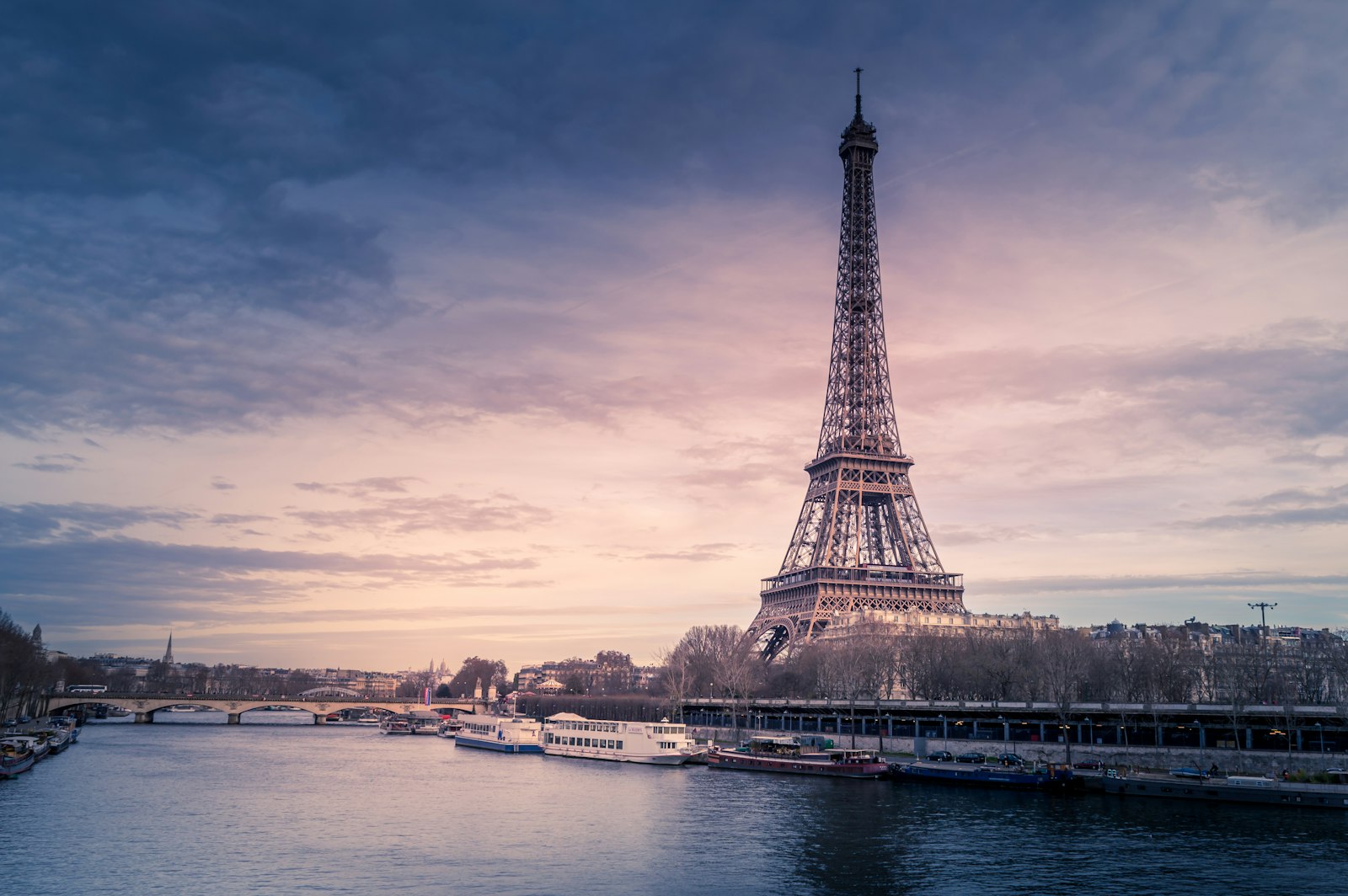
Paris, France
Updated April 2026 · Places to Visit in Europe
Paris does not need an introduction. The city is so deeply embedded in the global imagination — through its monuments, its fashion, its cinema, its food, its literature — that arriving for the first time can feel almost disorienting in its familiarity. You have seen the Eiffel Tower in a hundred films. You have walked the galleries of the Louvre in textbooks. You have read Hemingway's account of moving through these same streets, and Balzac's, and Victor Hugo's. Paris is one of those rare places where the mental image and the physical reality genuinely do meet, and where the meeting produces something like wonder.
But the Paris that exists in the imagination is, of course, only one of many Parises. The city of grand monuments and Haussmannian boulevards is real, but so is the Paris of crooked medieval streets in the Marais, of the canal-side barges and the old working-class arrondissements of the east, of the Belleville night markets and the Vietnamese pho joints of the 13th. There is the Paris of the grandes écoles and the world of the suburban cités, the Paris of the weekend marchers and the Sunday-morning bakers, the Paris that speaks little English and eats at lunchtime and considers dinner after 9pm to be on the early side. The Paris that tourists see is a beautiful surface, and the Paris that lives behind that surface is, if anything, even more so.
This guide is designed to help you experience both. It covers the essential sites that any first-time visitor should not miss — the Eiffel Tower, the Louvre, Notre-Dame, the Champs-Élysées — and also the neighbourhoods, restaurants, day trips, and practical details that will let you inhabit the city the way a temporary Parisian might. Whether you have two days or ten, whether you are travelling on a backpack budget or in a certain style, the structure of the city makes it possible to see a great deal without ever feeling rushed.
Best Time to Visit
Paris has a temperate oceanic climate with mild winters, warm summers, and clearly defined seasons. Each is beautiful in its way, but the city is at its best at two specific times.
Spring (April-June) is the classic Paris season — the magnolia trees in the Jardin des Plantes come into flower in early April; the chestnut trees in the Tuileries and Luxembourg Gardens a few weeks later; the rooftops of the Marais fade from grey to gold in the long evenings of late May and early June. Temperatures are 12-22°C, the light is gentle, and the city feels open and optimistic. The Paris Marathon in early April and the Fête de la Musique on 21 June are highlights.
Autumn (September-October) is the second sweet spot — the summer crowds thin out, the temperature drops to 15-22°C, and the trees along the Canal Saint-Martin and in the Buttes-Chaumont turn gold and red. The Paris Fashion Week at the end of September / beginning of October fills hotels around the Marais and Saint-Germain; the Nuit Blanche (all-night arts festival) is in early October.
Summer (July-August) is crowded — many Parisians leave for August, which means some restaurants and small shops close, but it also means the city becomes more relaxed and outdoor-cafe-focused. The Paris Plages program converts the right bank of the Seine into a temporary beach in July and August. Temperatures are 22-30°C, with occasional heat waves pushing above 35°C. The key is to book hotel rooms and museum tickets well in advance.
Winter (November-March) is cold (often 2-8°C, occasionally below freezing) but atmospheric — the Christmas lights along the Avenue Montaigne and the Faubourg Saint-Honoré make for some of Europe's most glamorous shopping streets; the Christmas market at the Tuileries is intimate and well-curated; the Musée d'Orsay and the Petit Palais are warm, uncrowded, and have distinct winter exhibitions. Hotel rates drop to their annual low.
Best Places to Stay
Paris is divided into twenty arrondissements arranged in a clockwise spiral from the centre. The first through the eighth are the most central and the most expensive; the outer arrondissements — ninth through twentieth — are generally more residential, more affordable, and often more interesting in their own right. Where you stay will shape your experience, and choosing well is one of the most consequential decisions of your trip.
The Marais (3rd & 4th) and Île de la Cité (4th): The Marais is the medieval heart of Paris, a dense grid of narrow streets, grand 17th-century hôtels particuliers, art galleries, and small independent shops. Staying here puts you in walking distance of the Picasso Museum, the Place des Vosges, the Centre Pompidou, Notre-Dame, and dozens of the city's best restaurants and bars. It is a real neighbourhood, not a tourist set-dressing, with a substantial Jewish and LGBTQ+ community that gives it character and edge. Hôtel du Petit Moulin (4th), a tiny boutique property in a 17th-century building with interiors by Christian Lacroix, is one of the most photographed small hotels in the city. Hôtel National des Arts et Métiers (3rd), with a rooftop bar overlooking the rooftops of the Haut Marais, is a design-forward option. Hôtel Jeanne d'Arc (4th), near the Place des Vosges, is a quieter mid-range choice in a beautifully preserved old building.
Saint-Germain-des-Prés (6th) and the Latin Quarter (5th): The Left Bank's intellectual and literary heart. The 6th arrondissement has the beautiful Luxembourg Gardens, the Église Saint-Sulpice, the cafés where Sartre and de Beauvoir used to sit, and a concentration of art galleries and antique shops that makes it one of the most pleasant neighbourhoods in Europe for an aimless afternoon walk. The 5th, just to the east, is the student quarter — younger, livelier, cheaper, and centred on the Sorbonne and the Panthéon. Hôtel Récamier (6th), a refined small property near Saint-Sulpice, has a leafy courtyard and old-world charm. Hôtel des Grands Boulevards (2nd, technically, but a good base for both banks) is a chic mid-range option in a converted 19th-century building near the Grands Boulevards.
The 1st, 2nd, and 8th: The most central and the most expensive. Staying in the 1st puts you at the foot of the Tuileries and a short walk from the Louvre, the Palais Royal, and the river. The 8th is the elegant Champs-Élysées and Faubourg Saint-Honoré quarter, all grand hotels, embassies, and designer boutiques. Le Meurice (1st), the 18th-century palace hotel facing the Tuileries, is a regular in lists of the world's best hotels and has been hosting royalty and heads of state for over a century. Hôtel Plaza Athénée (8th), with its signature red awnings on Avenue Montaigne, is the place for fashion-week people-watching. Hôtel Brighton (1st), a 19th-century property overlooking the Tuileries, is a slightly more accessible old-world option. None of these are cheap, but for a once-in-a-lifetime stay they are unforgettable.
Montmartre (18th) and Pigalle (9th): The hilly northern neighbourhoods feel like a village, even though they are at the very centre of the city. Cobblestone streets, ivy-covered buildings, artists' studios, and the white domes of the Sacré-Cœur at the top of the hill. Montmartre is genuinely atmospheric in a way few central Paris neighbourhoods are — and it has remained so partly because the streets are too narrow and steep for modern traffic, partly because of the protection of historic-preservation rules. Hôtel Particulier Montmartre (18th) is a tiny five-suite hideaway in a private mansion's garden, run as a member's club in the off-hours. Terrass Hôtel (18th), near the Sacré-Cœur, has a rooftop restaurant with one of the best panoramic views in the city. Hôtel des Arts Pigalle (9th) is a stylish mid-range option in the up-and-coming southern Pigalle area.
Bastille and the 11th: East of the Marais, the 11th is the Paris that locals actually live in. A mix of market streets, neighbourhood bistros, independent boutiques, and some of the best cocktail bars in the city. The 11th is not in the guidebooks the way the Marais or Saint-Germain are, which is part of its appeal. Hôtel Fabric (11th), a converted textile workshop in the Oberkampf neighbourhood, is a design-forward boutique with a real neighbourhood feel. Hôtel du Nord (10th, just north of the 11th) is a budget-friendly option in an atmospheric old building near the Canal Saint-Martin.
Budget: Paris is one of the more expensive cities in Europe, but budget accommodation exists if you know where to look. Generator Paris (10th), a stylish design hostel near the Canal Saint-Martin, has both dorm beds and private rooms. St Christopher's Inn Canal (10th) is a reliable budget chain near Gare du Nord. Hôtel des Arts Paris Montmartre (18th) is a clean, simple two-star in a good location. The MIJE Le Fauconnier, MIJE Maubuisson, and MIJE Fourcy hostels in the Marais (4th) are run by a non-profit in three beautifully restored 17th-century mansions; they are basic but atmospheric, and the location is unbeatable for the price. Hôtel Marignan (1st), near the Louvre, has small single rooms starting at around €90 per night — basic but clean, with an unbeatable central location.
Best Places to Eat
Parisian food is one of the great cuisines of the world, and the city is dense enough that you can eat extremely well at almost any price point. The trick is knowing what to look for: the small bistros with the handwritten menus, the boulangeries whose croissants still sell out by 10am, the fromageries where the affineur (cheese ager) knows every customer by name. The Michelin-starred temple of haute cuisine is one part of the story. The corner bistro where the owner is also the chef and the wine is the only thing on the menu that was not made that day is the other, equally important part.
Fine Dining: Paris has more Michelin stars per square kilometre than any other city in the world, and the top of the pyramid is one of the most extraordinary dining experiences on the planet. Guy Savoy (Monnaie de Paris, 6th) has been at or near the top of the World's 50 Best Restaurants list for two decades. The Monnaie de Paris, the historic French mint on the river, is a spectacular setting. The innovative tasting menu is one of the most technically accomplished in the world. Tasting menus from around €430 per person. Le Jules Verne, the restaurant on the second floor of the Eiffel Tower run by chef Frédéric Anton, is a special-occasion favourite. Eating classic French cuisine while looking out at the Paris skyline from the tower is something you never forget. Lunch menus from around €190, dinner from €290. Alain Ducasse au Plaza Athénée (8th) is a study in the very highest level of French haute cuisine, with Ducasse's signature "naturalness" approach that lets the ingredients speak. Tasting menus from around €320 per person. L'Ambroisie (4th, Place des Vosges) has held three Michelin stars for over three decades — the most storied classical French restaurant in Paris, an experience of timeless elegance.
Classic French Bistros: The Parisian bistro is a category unto itself, and the best of them are not the tourist places near the major monuments but the small neighbourhood rooms that have been serving the same dishes for generations. Bouillon Chartier (9th, near Gare du Nord) is a 19th-century dining hall that has been serving classic French food at absurdly low prices since 1896. The room is a national historic monument, the menu is extensive, and the bill for a three-course meal with wine rarely exceeds €25. Le Procope (6th) is the oldest café in Paris, founded in 1686 — the place where Voltaire, Rousseau, and the Encyclopédistes used to meet. The food is reliably good, but you go for the room. Chez Janou (3rd, near the Place des Vosges) is a Provençal bistro with a vast pastis list and a daily-changing menu of southern French cooking. Le Bistrot Paul Bert (11th) is a textbook Parisian steak frites bistro, the kind of place where the menu has not changed in 30 years and everyone is there for the same reason.
Pastries and Bakeries: The Parisian bakery is a serious institution. Ladurée (6th, 8th, and others) is the originator of the macaron as we know it today — a double-shell almond meringue with flavoured ganache filling, sold in pastel-coloured boxes. The original shop on the Rue Bonaparte has been a Paris fixture since 1862. Pierre Hermé (6th) is widely considered the best patissier in Paris, with creations like the Ispahan (rose, lychee, and raspberry) and the 2000-Feuilles that have become classics. Du Pain et des Idées (10th, near Canal Saint-Martin) makes what many consider the best croissant in Paris — a small bakery that opens only on weekday mornings, with a short menu of exceptional breads and viennoiseries. Poilâne (6th, with shops around the city) is the legendary baker of the pain aux noix and the famous apple tart — the pain Poilâne is a benchmark for what sourdough can be. Café de Flore (6th) and Les Deux Magots (6th), across the street from each other on the Boulevard Saint-Germain, are the famous literary cafés — overpriced by modern standards, but the people-watching is unbeatable and the experience is part of the Paris education.
Markets and Street Food: The Parisian market is one of the great pleasures of the city. The Marché d'Aligre (12th), in the Place d'Aligre, is the most authentically local — a daily food market with a covered hall for cheese, meat, and fish, surrounded by an outdoor market for fruit and vegetables. Come on a Saturday morning, buy ingredients, and have a picnic. The Marché aux Puces de Saint-Ouen (18th, just north of Montmartre) is the largest antique market in the world — a vast weekend sprawl of vintage furniture, art, fashion, and bric-a-brac that has been going since 1870. Plan to spend at least half a day. For street food, the falafel restaurants of the Rue des Rosiers in the Marais (4th) are legendary — L'As du Fallafel is the most famous, but several others are equally good and the line moves faster. The jambon-beurre (butter-and-ham baguette) from any good boulangerie is a perfect Parisian lunch at €4-5. The Vietnamese restaurants in the 13th arrondissement are some of the best Vietnamese food outside Vietnam.
Best Sites to Visit
The Eiffel Tower and Champ de Mars: The 330-metre iron tower built by Gustave Eiffel for the 1889 World's Fair is the most-visited paid monument in the world. It is also, for all the cliché, genuinely spectacular — particularly at sunset, when the iron is at its most beautiful and the city begins to light up below. The tower has three levels: the second floor at 115 metres, accessible by lift or stairs (704 steps); and the summit at 276 metres, accessible only by lift. Tickets for the lift to the top cost around €29 for adults; stairs to the second floor followed by a lift to the top is around €24. Book well in advance — the queue without a reservation can be two hours in summer. The Trocadéro, on the opposite bank of the Seine, is the classic viewpoint for a first glimpse of the tower.
The Louvre Museum: The largest art museum in the world, with 35,000 works on display across three wings in a former royal palace. The Louvre is overwhelming — it requires planning. Most visitors concentrate on the highlights: the Winged Victory of Samothrace, the Venus de Milo, the Coronation of Napoleon, Liberty Leading the People, the Vermeers, and of course the Mona Lisa. The Mona Lisa is small and surrounded by a permanent scrum of tourists; do not let it dominate your visit. Plan a route in advance using the museum's excellent app, focus on one or two wings (the Denon wing for the Italian masters and the Mona Lisa, the Sully wing for French paintings and the medieval Louvre, the Richelieu wing for French sculpture and the Near Eastern antiquities), and budget at least three hours. Open Wednesday-Monday, closed Tuesday. Entry €22.
Notre-Dame de Paris: The great Gothic cathedral on the Île de la Cité, begun in 1163 and largely completed by 1345. The 2019 fire destroyed the roof and the 19th-century spire, but the stone structure survived, the two medieval rose windows were saved, and a meticulous restoration is being completed in phases. The cathedral interior is open to visitors for free; the towers (which you can climb for one of the best views in Paris) are accessible with a reservation. The choir, the rose windows, and the treasury are highlights. The square in front, with the bronze "Point Zéro" marker, is where all French road distances are measured from. Even now, with the restoration work still partially visible, Notre-Dame is one of the most moving buildings in Europe.
The Champs-Élysées and the Arc de Triomphe: The grand 19th-century avenue stretching from the Place de la Concorde to the Arc de Triomphe, lined with luxury shops, theatres, restaurants, and the Élysée Palace (official residence of the French president, not open to visitors). The avenue is the traditional centre of national celebration — Bastille Day military parade, the final stage of the Tour de France, the gatherings of joy and grief that have punctuated modern French history. The Arc de Triomphe, commissioned by Napoleon in 1806 and completed in 1836, sits at the western end of the avenue at the centre of the Place Charles de Gaulle (formerly Place de l'Étoile), where twelve grand avenues converge. The view from the top of the Arc, across the twelve radiating avenues, is one of the great Paris panoramas. Entry around €13.
The Musée d'Orsay: Housed in a converted Beaux-Arts railway station on the Left Bank, the Musée d'Orsay holds the world's greatest collection of Impressionist and Post-Impressionist art — Manet, Monet, Renoir, Degas, Cézanne, Van Gogh, Gauguin. The collection is more focused and more navigable than the Louvre, and the building itself is one of the great architectural spaces in Paris. Do not miss the clock windows on the fifth floor, which look out across the Seine to the Tuileries. Open Tuesday-Sunday, closed Monday. Entry €16.
Montmartre and the Sacré-Cœur: The hilltop neighbourhood in the 18th arrondissement, with the white travertine domes of the Basilica of the Sacré-Cœur at its summit. Montmartre was a village outside Paris until 1860, and it has retained something of the village atmosphere — narrow cobblestone streets, ivy-covered houses, the working studios of generations of artists. The Place du Tertre, the small square at the top of the hill, is the heart of the tourist Montmartre — full of portrait painters and caricaturists, expensive crêpes, and dense crowds. The smarter Montmartre is found in the streets to the south and west, around the Musée de Montmartre (in the house where Renoir and Suzanne Valadon worked), the Vineyard of Montmartre (the only working vineyard in Paris, producing a few hundred bottles of gamay each year), and the Cimetière de Montmartre (where Stendhal, Émile Zola, Edgar Degas, and Dalida are buried). The Sacré-Cœur is free; the dome climb is around €8.
The Marais: The medieval quarter in the 3rd and 4th arrondissements, the heart of the city's Jewish and LGBTQ+ communities, and the densest concentration of small museums, independent boutiques, art galleries, and restaurants in Paris. The Place des Vosges, a perfectly symmetrical 17th-century square in the centre of the Marais, is one of the most beautiful public spaces in the city — the houses that surround it are among the oldest and most elegant in Paris, and the arcaded walkways are perfect for a slow stroll. The Musée Picasso (5, rue de Thorigny) has the world's largest collection of Picasso's work. The Musée Carnavalet, dedicated to the history of Paris, is in two adjoining 16th-century mansions and is free. The Pavillon de l'Arsenal, near the Bastille, is a small museum of urban planning that gives a fascinating view of how Paris developed. The Promenade Plantée, a 4.7-kilometre elevated linear park on a former railway viaduct that runs from the Bastille east to the Bois de Vincennes, is one of the great walks in the city.
Versailles (Day Trip): The Palace of Versailles, a half-hour by RER C from central Paris, is the largest royal palace in Europe and a UNESCO World Heritage Site. Louis XIV moved the French court here in 1682, and his successors expanded the palace and the gardens until they employed 20,000 people. The Galerie des Glaces (Hall of Mirrors), the 73-metre-long hall where the Treaty of Versailles was signed in 1919, is one of the most extravagant rooms in Europe. The gardens, designed by André Le Nôtre, are the apotheosis of the French formal garden. Plan a full day. The palace is closed on Mondays; entry is around €20 for the palace plus €10 for the gardens. In summer the Saturday-night Grandes Eaux musical fountains show is a spectacular experience.
Père Lachaise Cemetery: The largest cemetery in Paris (43 hectares) and the most visited in the world, Père Lachaise is one of the great green spaces of the city and a remarkable open-air museum of 19th- and early-20th-century funerary art. Founded by Napoleon in 1804 on the eastern slopes of the 20th arrondissement, it is now the resting place of over a million people — including Chopin, Oscar Wilde, Jim Morrison, Edith Piaf, Molière, Balzac, and Gertrude Stein. The cobbled allees wind between elaborate tombs designed by the leading architects and sculptors of the Belle Époque; the landscaped hillside is rich with old trees; the views from the upper sections reach across Paris to the Père Lachaise's own funerary chapel and beyond to the Sacré-Cœur. Free to enter; the small map sold at the gate is invaluable for finding the famous graves. The nearest métro is Père Lachaise on Line 2.
Sainte-Chapelle: A jewel of High Gothic architecture on the Île de la Cité, completed in 1248 to house Louis IX's collection of relics of the Passion of Christ. The lower chapel is competent but unremarkable; the upper chapel is one of the most spectacular interiors in Europe, with fifteen 15th-century stained-glass windows totalling 1,113 panels that flood the space with coloured light. The rose windows are particularly extraordinary. Combined with the Conciergerie (the medieval palace that became a Revolutionary prison), Sainte-Chapelle makes a half-day outing that anchors any visit to the Île de la Cité. Entry around €13, joint ticket with the Conciergerie €18; pre-booking is essential in summer.
Musée Rodin: The mansion on the Rue de Varenne in the 7th arrondissement, with its beautiful formal garden and the Hôtel Biron (a Rococo delight from the 18th century), houses the world's largest collection of Auguste Rodin's sculptures — including The Thinker, The Kiss, The Burghers of Calais, and the studies for the Gates of Hell. A short walk from the Invalides and Napoleon's tomb, the museum rewards the visit for its setting as much as for the sculptures: the rose garden at the centre is one of the most peaceful public spaces in central Paris. Open Tuesday-Sunday. Entry €13; the garden is free and accessible from the Boulevard des Invalides.
Sample 2-3 Day Itinerary
Day 1: Classic Paris
Start early with a coffee and a croissant at a café on the Rue de Rivoli, then walk to the Louvre for an opening visit (arrive at 9am to beat the crowds). Spend three hours focusing on one wing — the Denon wing for the Mona Lisa and the Italian masters is the most popular, but the Sully wing, with the medieval moat and the French paintings, is less crowded and more rewarding. After lunch at a café in the Palais Royal gardens, walk across the river to the Île de la Cité and visit Notre-Dame (free, but the towers and the treasury require separate tickets). Cross to the Left Bank, walk through the Saint-Germain-des-Prés neighbourhood, and stop for an apéritif at a café on the Boulevard Saint-Germain. End the day with a Seine river cruise (Bateaux Mouches or Bateaux Parisiens, around €15-18 for an hour) to see the city lit up from the water.
Day 2: Right Bank, Montmartre, and the Marais
Morning at the Musée d'Orsay (open until 6pm most days, but the morning light through the great clock windows is unbeatable). Walk along the Seine to the Tuileries Garden, have lunch at one of the café kiosks in the garden, and continue west along the Champs-Élysées to the Arc de Triomphe (climb the stairs or take the lift to the top for the panoramic view). Take the metro to Anvers in the 18th, walk up to Montmartre and the Sacré-Cœur (the sunset view from the steps is one of the most famous in Europe), and have dinner in the back streets of the neighbourhood — Le Consulat on the Place du Tertre is touristy but atmospheric, while the small restaurants on the Rue des Trois Frères and the Rue Yvonne Le Tac are more local. End the night with a drink at Le Très Particulier in Montmartre or, if you are still up, head to the Oberkampf area in the 11th for late-night cocktails.
Day 3: Versailles or the Marais
Option A (Full day): Take the RER C to Versailles for the full day. Buy a passport ticket (around €27, includes the palace, the Trianons, and the gardens), arrive at opening time (9am), and plan for at least five hours. Lunch in the town of Versailles, then return to Paris for an evening stroll through the Marais and dinner at a bistro in the Place des Vosges area — the Petit Marché on the Rue de Béarn is a reliable neighbourhood bistro, while Le Servan on the Rue Saint-Maur in the 11th (just east of the Marais) is one of the most exciting modern French restaurants in the city.
Option B (Marais and the East): Spend the morning in the Marais — the Place des Vosges, the Musée Picasso (allow two hours), and a slow walk through the small streets. Have lunch at L'As du Fallafel on the Rue des Rosiers (or at one of the excellent new bistros of the Haut Marais, like Le Servan in the 11th). After lunch, visit the Centre Pompidou (modern and contemporary art, the building is itself a Renzo Piano and Richard Rogers masterpiece) and the Promenade Plantée — the elevated park that runs from the Bastille east to the Bois de Vincennes, walking along the rooftops of the 12th arrondissement. End with a drink at a rooftop bar (the Perruche on top of the Printemps Haussmann, the Mama Shelter rooftop in the 20th, or the Wanderlust on the Seine in the 13th) and dinner in the Bastille area — the Rue de Charonne and the Rue de la Roquette are the dining streets.
Note: Pre-book museum tickets in advance (the Louvre, d'Orsay, Versailles all sell timed entry), wear comfortable walking shoes (Paris is much hillier than it looks), and consider the Paris Museum Pass (€70 for two days, €85 for four days, €100 for six days) if you are planning to visit multiple sites. The Navigo Easy transit pass (around €2 per journey, or a €30 weekly pass for unlimited travel) is the cheapest way to use the metro, bus, and RER.
Upcoming Events
- Fête de la Musique — June 21, Citywide — Paris's beloved free music festival transforms every arrondissement into an open-air concert venue. Thousands of performers — from classical ensembles in church courtyards to DJs on the Seine quays — play until dawn. The Vincennes Racecourse hosts a special edition with aerial acrobatics by the Patrouille de France and flight simulator access.
- Fête du Beaujolais Nouveau 2026 — Thu 19 – Sun 22 November, Bistrots et caves du 11e et autres arrondissements, Paris. Célébration traditionnelle du beaujolais nouveau dans les bistrots et caves de Paris — dégustations, accordéon et ambiance populaire.
- La Traviata — Through July 13, Opéra Bastille — Verdi's deeply moving opera returns to the Bastille with a stellar cast; one of the summer season's most anticipated productions.
- La Bayadère — June 17 – July 14, Opéra Bastille — The Paris Ballet presents this dramatic classical ballet with dramatic density and virtuosic choreography.
- La Cenerentola — Through July 11, Palais Garnier — Rossini's Cinderella opera in a sparkling production at the stunning Garnier opera house.
- Sainte-Chapelle Concert Series — All year round, Sainte-Chapelle — Extraordinary classical concerts performed inside Paris's most spectacular Gothic architectural jewel, beneath its breathtaking stained-glass windows.
- Paris Cauldron — Nightly from June 21, Tuileries Garden — The former Olympic Cauldron from the 2024 Games returns, lifting off over the garden's pool each evening at 10:30pm through July. Spectacular views also from Place du Carrousel and the Seine banks.
- Salon Marjolaine — Sat 7 – Wed 11 November, Parc Floral de Paris (bois de Vincennes). Annual organic and natural products show — bio food producers, eco-living, gardening, conferences. From €9.
Where to Next
Paris is one of Europe's great hub cities: by direct TGV or Thalys train, you can be in London (2h 16m), Brussels (1h 25m), Amsterdam (3h 20m), Cologne (3h 20m), Frankfurt (3h 50m), Zurich (4h), Geneva (3h), and Lyon (2h). The city's location at the centre of the French rail network also puts you within easy reach of the châteaux of the Loire, the Champagne region, and the Normandy landing beaches. If you have a few extra days, here are the natural side-trips.
Versailles — A half-hour by RER C from the Champs de Mars station. The largest royal palace in Europe, the Hall of Mirrors, the Trianons, and the formal gardens designed by André Le Nôtre. Full-day visit recommended; the Saturday-night Grandes Eaux (musical fountains) is one of France's great summer spectacles.
Giverny — Claude Monet's house and gardens, 45 minutes by train to Vernon and a short shuttle or bike ride. The water-lily pond and the Japanese bridge are precisely as the paintings show. Best in late spring (May-June) for the flowers; quieter in autumn for the colours. giverny.fr
Fontainebleau — A 40-minute train ride from Gare de Lyon to the town, with the château and its forest considered the birthplace of the French Renaissance style. François I transformed the medieval hunting lodge into one of the most beautiful royal residences in Europe; the forest is a popular weekend hiking and bouldering destination. fontainebleau-tourisme.com
Chartres — About an hour from Paris on the TER train to Chartres. The Gothic cathedral is one of the great masterpieces of medieval architecture, with original 12th- and 13th-century stained glass (the 'Chartres blue') preserved remarkably intact. The Old Town around the cathedral is similarly well-preserved, with half-timbered houses and the River Eure running beneath the medieval bridges.
Auvers-sur-Oise — The village 30 km northwest of Paris where Vincent van Gogh spent the last 70 days of his life in 1890. The church, the cemetery, and the inn where he died are all preserved and easy to find on foot; the Château d'Auvers offers an excellent immersive experience of the Impressionist era. Allow half a day.
Reims and Champagne — An hour by TGV from Gare de l'Est. The cathedral is where the kings of France were crowned for over a millennium; the Champagne houses (Veuve Clicquot, Taittinger, Krug, Pommery, Ruinart) host underground cellar tours that end with tastings. A perfect two-day side trip from Paris.
Brussels, London, and Amsterdam — All on the Thalys / Eurostar high-speed network from Paris Gare du Nord. Brussels in 1h 25m, London St Pancras in 2h 16m (or by Paris-London overnight sleeper), Amsterdam in 3h 20m. Paris is one of the few places in Europe where a city break and a two-country rail tour can combine naturally in a single trip.
Local Tips
Paris rewards a particular kind of traveller — someone willing to look past the obvious, look closer at the small things, and accept that the city operates at a slightly different rhythm than London or New York. A handful of small habits make a difference between a hurried tourist trip and a real visit.
Pre-book every major museum. The Louvre, d'Orsay, the Pompidou, Versailles, and Sainte-Chapelle all sell timed-entry tickets online. Walk-up queues in summer can exceed two hours. The official websites are always the cheapest option; third-party resellers charge a 20-30% markup.
Eat lunch at 12:30, dinner at 19:30. Parisian kitchens close between roughly 14:00 and 19:00 for service reset. Missing this window means eating under a heat lamp at a tourist brasserie. Aim for an early lunch and a slightly later-than-American dinner; you'll eat with the locals and have the best menus.
Carry €30-50 in cash. Many of the best bistros, boulangeries, and marché stalls are still cash-preferred, and smaller establishments may refuse cards entirely for small purchases. ATM withdrawals at Crédit Agricole, BNP Paribas, or Société Générale tend to be the cheapest (avoid Euronet ATMs in tourist zones, which charge €5-7 per withdrawal).
Validate paper tickets, every time. Métro tickets bought from machines in the central stations work across the entire Île-de-France network until you validate them in the bright-yellow machines at the platform. A forgotten validation is the source of half of all the fines issued; if you don't hear the click and see the stamp, your ticket is not active.
The Paris Museum Pass is worth it after two paid sites. At €70 for two days it covers the Louvre, d'Orsay, Pompidou, Sainte-Chapelle, and 40+ other sites with skip-the-line access. If you plan to visit three or more, it pays for itself in saved time alone.
Look up, and walk slowly. The 2nd-floor balconies of Haussmann's buildings, the half-timbered 16th-century houses in the Marais, the Art Nouveau métro entrances by Hector Guimard, the Art Deco shopfronts along the Faubourg Saint-Antoine — the most beautiful parts of Paris are not in the monuments but in the buildings you walk past to reach them. Allow for an aimless hour.
The 1st arrondissement and the 7th are quietest on Sundays. Many shops and small businesses close on Sunday in France; the central districts around the Tuileries and Saint-Germain-des-Prés are noticeably calmer than the Marais or the 11th, which keep a weekend rhythm of markets and outdoor dining.
The Métro closes at 0:40 weekdays, 1:40 Friday-Saturday. Night buses (Noctilien) run all night but are slower and less frequent. A taxi or Vélib (the bike-share) is more reliable after midnight; Uber has been essentially legalised and is competitive with the cabs.
Frequently Asked Questions
How many days do I need in Paris? Three full days is the sweet spot for first-time visitors — enough to see the essentials (Eiffel Tower, Louvre, Notre-Dame, a museum of choice) plus a day trip to Versailles. Five days lets you add the Marais in depth, a market morning, and a Left Bank walk. With a week, you can layer in Fontainebleau, Giverny, and a slower neighbourhood-by-neighbourhood rhythm.
What is the best area to stay in Paris? For first-time visitors, the Marais (3rd/4th), Saint-Germain-des-Prés (6th), and the area around the Louvre and Palais Royal (1st) put you within walking distance of the most sites, with the best restaurants and métro connections. For a more local experience, the 11th (Oberkampf, Bastille) has the bistros, bars, and markets where Parisians actually spend their evenings, with prices lower than the central districts.
Is Paris expensive? Paris is one of the more expensive European capitals, but a midrange budget of €150-200 per person per day (hotel, meals, transport, one paid attraction) is comfortable. Budget travellers can do €80-100 per day using hostels, boulangerie lunches, the Paris Museum Pass, and free walking tours.
Is Paris safe at night? Generally yes, with the usual precautions of any major European capital. The areas around the Gare du Nord and the Gare de l'Est warrant extra care after dark, and pickpockets operate around the major tourist sites (Eiffel Tower queues, the Louvre métro, Montmartre). The Marais, Saint-Germain, and the 11th are reliably safe in the evenings.
Do I need a visa to visit Paris? If you are a Schengen-area or EU citizen, you need only a national ID. Most non-EU visitors (US, Canada, Australia, NZ, UK, Japan) can enter visa-free for up to 90 days within the Schengen area. Paris is part of France's Métropole du Grand Paris; there are no special visa requirements beyond the standard Schengen rules.
Is the tap water safe in Paris? Yes — Paris tap water is among the cleanest in Europe. The water comes primarily from aqueducts in the Champagne and Normandy regions and is rigorously tested. Many residents drink from the public Wallace fountains (the green cast-iron drinking fountains) around the city.
How do I avoid long lines at the Louvre and the Eiffel Tower? Pre-book timed-entry tickets online at least 2-3 weeks ahead in summer, 1-2 weeks in shoulder season. The Paris Museum Pass covers the Louvre, d'Orsay, Centre Pompidou, Versailles and 40+ other sites with skip-the-line access. For the Eiffel Tower, the official lift ticket is the only way to skip the on-site queue; stairs tickets (€24) are also fast to buy on site.
What is the best day trip from Paris? Versailles is the classic: a half-hour RER C ride to the largest royal palace in Europe, with the Hall of Mirrors, the Trianons, and the formal gardens designed by Le Nôtre. Other worthy day trips include Giverny (Monet's gardens, 45 minutes by train), Fontainebleau (château and forest, 40 minutes), Chartres (the Gothic cathedral, 1 hour), and Auvers-sur-Oise (Van Gogh's last home, 1 hour).
Why is Paris called the City of Light? Two origins: the Enlightenment — Paris was the intellectual capital of 18th-century Europe, the city of Voltaire, Diderot, and Rousseau, hence the Ville Lumière ('city of light' as intellectual illumination). And the early 19th century, when Paris became one of the first European cities to install gas street lighting, making it a literal city of light at night.