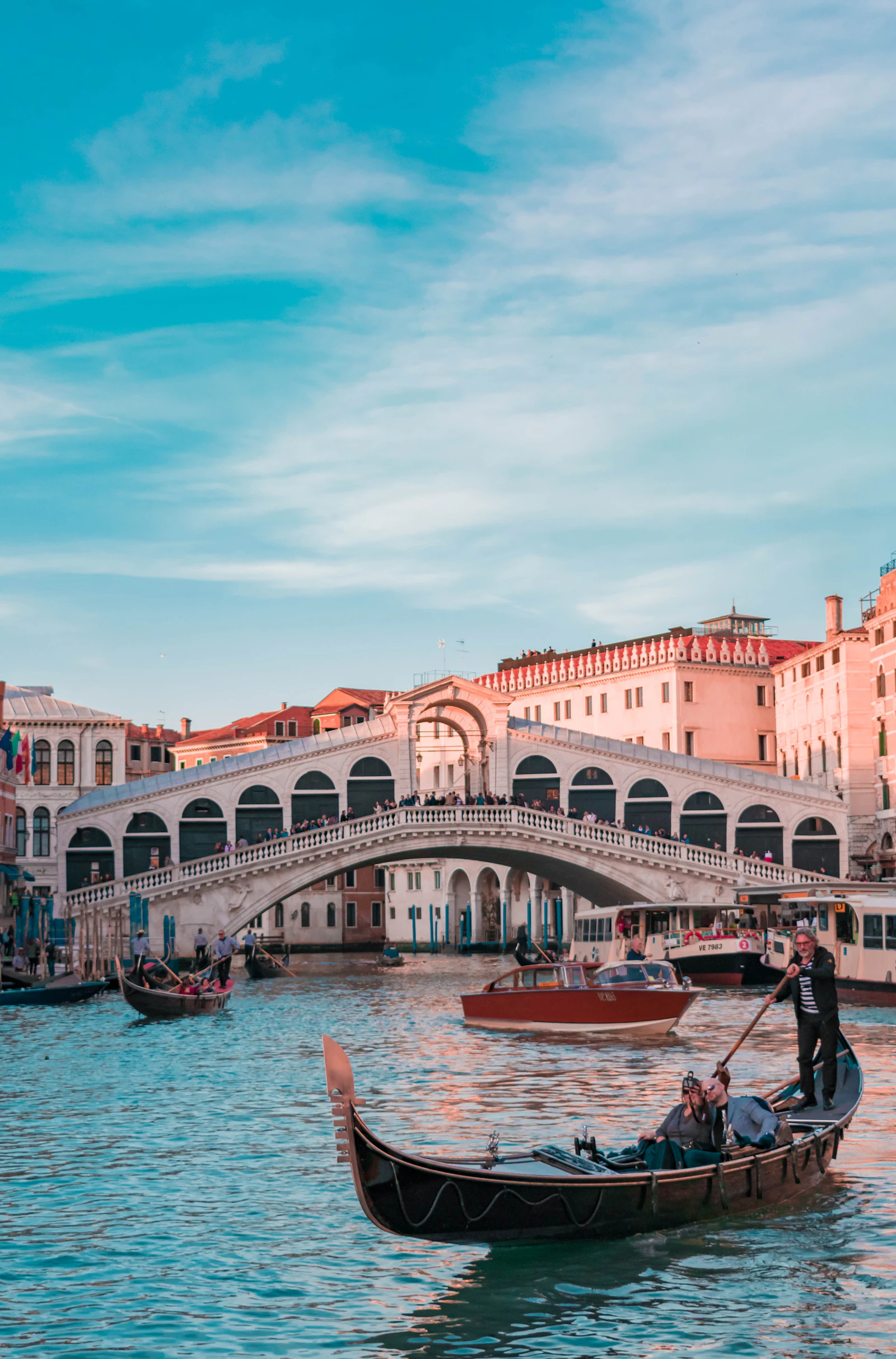
Venice, Italy
A practical travel guide to Venice, Italy: how to navigate the lagoon city, where to stay across the six sestieri, what to see beyond St. Mark's Square, where to eat cicchetti and proper Venetian cuisine, and how to plan a 2-3 day visit that does not feel like a theme park.
Venice is one of the few cities on earth that everyone has an opinion about before they arrive. Some travellers think of it as a museum under siege, sinking under the weight of its own beauty. Others think of it as a working city of 55,000 residents, a maritime republic that built the foundations of modern finance and global trade, and still gets its vegetables by boat every morning. Both views are right. The Venice most visitors meet is somewhere between the two, and the joy of a first visit is to find the parts of the city that locals actually use — the backstreet bacari, the lagoon islands beyond Burano, the early morning light on the Grand Canal before the cruise ships dock.
This guide is for travellers who want to understand Venice as a city, not just as a checklist of monuments. It covers where to stay (from grand hotels on the Grand Canal to apartment rentals in Cannaregio and Dorsoduro), where to eat (cicchetti, seafood, traditional Venetian cooking, and the bacari tradition), what to see (St. Mark's Square and the islands, but also the lesser-known churches, the Scuola Grande di San Rocco, and the contemporary art spaces), and how to plan a 2-3 day visit that lets you experience the lagoon properly.
Why Venice Is Different
Venice is the only major European capital that has no cars, no roads, and no wheeled vehicles of any kind. Everything moves by boat or on foot. This is not a gimmick; it is the underlying structure of the city, the reason the architecture is the way it is, the reason the food tradition developed the way it did, and the reason the rhythm of the day is different from any other city you will visit. The morning opens with the noise of the barges bringing produce from the mainland; the lunch break is long and formal; the cicchetti hour begins in late afternoon; dinner is late and the city stays up well past midnight.
The other thing most visitors do not realise is that Venice is small. The historic centre is essentially a group of 118 small islands connected by 400 bridges, all of it walkable in 30 minutes from end to end. You can stand in St. Mark's Square and reach almost every major sight in the centre on foot. The 55,000 residents live on these islands, send their children to school by boat, do their weekly shop at the Rialto market, and go to work at the same hospital and the same universities as any other Italian city. The famous crowds of summer are the visitors, not the locals.
A note on the water: Venice floods about four times a year on average, when the tide rises more than 110 cm above mean sea level — the acqua alta. The flooding is most severe in November and December, and the most dramatic floods in living memory were in November 2019, when the tide reached 187 cm. Most of the year, the city's raised walkways (the passerelle) are stored away, and the only water in the streets is the ordinary canal water. Plan your visit between April and October if you want to avoid the worst of it.
Best Places to Stay
Venice is unusual among European cities in that almost all accommodation is in the historic centre, and almost none of it is in a chain. The grand hotels occupy converted palaces on the Grand Canal, the small family-run hotels are tucked into the backstreets of Cannaregio and San Polo, and the apartment rental market is the largest in Italy. The choice of sestiere (district) matters more than the choice of price band, because Venice is small enough that your daily life will be defined by the side streets near your hotel, not by the central sights.
San Marco and San Polo: The Centre
The most central sestieri, on either side of the Rialto Bridge. Staying here means walking distance from St. Mark's Square, the Rialto market, and the Accademia.
- The Gritti Palace (Campo Santa Maria del Giglio) is the grandest small hotel on the Grand Canal, a 15th-century palazzo that was the home of the Gritti family and later the US consulate. The clubby bar is one of the best places in Venice for a pre-dinner cocktail. Doubles from €700 in high season.
- Belmond Hotel Cipriani (Giudecca 10) is the legendary Giudecca hotel, a 10-minute boat ride from St. Mark's Square with the most beautiful large swimming pool in the city and a wonderful restaurant. Doubles from €900.
- Hotel Ai Reali (Campo della Fava) is a small boutique hotel in a 17th-century palace near the Rialto, with a small spa in the former salt warehouse. Doubles from €280.
- Hotel L'Orologio (San Polo) is a design hotel on the Grand Canal with a contemporary look and an excellent breakfast. Doubles from €230.
- Locanda de l'Orso (Cannaregio) is a family-run pensione in a 15th-century building, walking distance from the Rialto. Doubles from €140.
Dorsoduro: The University Quarter
The sestiere on the south side of the Grand Canal, home to the Accademia galleries, the Peggy Guggenheim Collection, and the Ca' Foscari university. Quieter than San Marco, more local, with the best of the city's evening life.
- Ca' Pisani Hotel (Dorsoduro) is a design hotel in a 15th-century building, with contemporary art on the walls and a small Turkish bath. Doubles from €260.
- Hotel American-Dinesen (San Vio) is a small family-run hotel in a 16th-century palazzo on the Grand Canal, named for the American painter John Singer Sargent. Doubles from €220.
- Palazzo Stern (Dorsoduro) is a small palazzo-hotel with a roof terrace overlooking the Grand Canal and the Salute church. Doubles from €290.
- Generator Venice (Giudecca) is the design hostel on Giudecca, the only hostel in Venice with a proper restaurant and a terrace bar. Dorms from €45, doubles from €160.
Cannaregio: The Quietest Sestiere
The northern sestiere, the largest and least visited by tourists, home to the Ghetto and most of the city's resident population. The best value in Venice.
- Ca' Sagredo Hotel (Campo Santa Sofia) is a 15th-century palazzo on the Grand Canal, recently converted to a 15-room luxury hotel, with the original Tiepolo frescoes. Doubles from €420.
- Hotel Giorgione (Cannaregio) is a comfortable mid-range option in a 17th-century building, with a courtyard garden and a generous breakfast. Doubles from €200.
- Ai Mori d'Oriente (Fondamenta della Sensa) is a small boutique hotel in a converted 19th-century silk-weaving house, with a tiny spa. Doubles from €190.
- Alloggi Agli Artisti (Calle dei Preti) is a small family-run pensione in a quiet backstreet, walking distance from the train station. Doubles from €120.
Giudecca: The Island Across the Canal
The long island to the south of the historic centre, separated by a wide stretch of the lagoon. A 10-minute vaporetto ride from St. Mark's Square, with some of the best views back over the city.
- Belmond Hotel Cipriani (Giudecca 10) — see above.
- Hotel Cipriani, A Belmond Hotel shares the Cipriani grounds with the more private Palazzo Vendramin (also Belmond), a 16th-century palazzo with nine suites.
- Casa Genova (Giudecca) is a small B&B in a former convent garden, with a quiet terrace and a simple breakfast. Doubles from €110.
Best Places to Eat
Venetian cuisine is one of the most distinctive regional traditions in Italy, and one of the most underrated. It is a coastal cuisine built on the lagoon and the Adriatic, with strong influences from the centuries of trade with the Byzantine empire, the Balkans, and the Levant. The foundation is seafood — crab, clams, cuttlefish, sardines, sea bass, branzino — paired with the rice and polenta of the Veneto. The cicchetti tradition (the Venetian answer to Spanish tapas) is the heart of the city's everyday eating culture: small plates of marinated seafood, cured meats, vegetables, and bread, served in the bacari (small wine bars) from late morning until late at night.
Cicchetti and Bacari
The bacaro is a Venetian institution. It is a small, often standing-room-only wine bar that serves ombre (small glasses of wine) and cicchetti all day. The cicchetti are small open-faced sandwiches or marinated seafood — baccalà mantecato (whipped salt cod), sarde in saor (sardines in a sweet-and-sour onion marinade), octopus salad, sopressa (cured pork), and a dozen variations of crostini. The tradition is to move from bacaro to bacaro, eating and drinking as you go, especially during the late-afternoon hour (5-7 pm) when the city stops for the cicchetti ritual.
- Cantina Do Mori (Calle dei Do Mori, San Polo) is the oldest bacaro in Venice, operating since 1462, with a tiny room of wooden shelves and a back room for serious drinking. The cicchetti are as good as anywhere in the city.
- Osteria Al Bovo (Calle del Paradiso, Castello) is a small bacaro in Castello, famous for its sarde in saor and its fried seafood.
- Bacarandino (Calle delle Razze) is a small modern bacaro with an excellent selection of natural wines and inventive cicchetti.
- Osteria alla Ciurma (Calle delle Razze) is a tiny bacaro run by a former fishmonger, with the freshest seafood in the city.
- Timon (Fondamenta dei Tolentini) is a bacaro in Cannaregio, with outdoor tables on a quiet canal and an excellent selection of small plates.
Trattorie and Ristoranti
The full-meal Venetian experience is more formal than the cicchetti tradition, and based on the seafood of the lagoon and the Adriatic. The classic dishes are risotto al nero di seppia (cuttlefish ink risotto), spaghetti alle vongole (clam pasta), fegato alla veneziana (calves' liver with onions — a Roman-influenced dish), and the baccalà mantecato served as a first course. The best restaurants are in the Dorsoduro and Cannaregio sestieri, away from the tourist routes.
- Osteria alle Testiere (Calle del Mondo Novo, Castello) is a tiny 22-seat restaurant near St. Mark's, often cited as the best seafood restaurant in the city. Reservations essential.
- Antiche Carampane (Calle delle Carampane) is a trattoria in a backstreet near the Rialto, famous for its fresh pasta and its traditional Venetian cooking.
- Ristorante Da Ivo (Calle de la Casselleria, San Polo) is the elegant seafood restaurant of choice for Venetian high society, with a 50-year history and an outstanding wine list.
- Oro (Calle dei Fabbri) is the contemporary Venetian restaurant of the Cipriani family, with a tasting menu built around the lagoon. Expensive but worth it.
- Trattoria da Romano (Calle della Malvasia, Burano) is the Burano institution, famous for its risotto di gò (goby risotto), a dish unique to the lagoon.
- Cantina Do Spade (Calle delle Do Spade) is the historic bacaro-trattoria near the Rialto, founded in 1488, with classic Venetian cooking at fair prices.
Sweet Things
Venice is also a city of historic cafes and pastry traditions. The classic stops are the famous Caffè Florian and Caffè Quadri in St. Mark's Square (the two oldest cafes in continuous operation in the world), the smaller pasticcerie in the backstreets, and the gelaterie that have proliferated in the last twenty years.
- Caffè Florian (Piazza San Marco) is the most famous cafe in the world, founded in 1720, with a string quartet and an outdoor terrace in summer. Prices are high; the experience is unique.
- Caffè Quadri (Piazza San Marco) is the other great piazza cafe, founded in 1775, with a more contemporary look and a Michelin-starred upstairs restaurant (Quadri).
- Pasticceria Tonolo (Calle dei Fabbri, Dorsoduro) is the Dorsoduro pasticceria, famous for its pinza (a sweet flatbread) and its tiramisu.
- Dal Mas (Calle dei Fabbri) is a small pasticceria with the best panettone in the city at Christmas.
- Rosa Salva (multiple locations) is the historic pasticceria chain with the best baicoli (a thin Venetian biscuit) and small pastries.
Best Sites to Visit
The sights of Venice are concentrated in the historic centre, and most of them are walkable from a central hotel. The two big-picture decisions are: how many days to allocate to the lagoon islands (Murano, Burano, Torcello), and whether to book the most popular sights (Doge's Palace, St. Mark's Basilica) online in advance to avoid the queues. Both decisions are worth making before you arrive.
St. Mark's Square and the Basilica
St. Mark's Square (Piazza San Marco) is the only square in Europe called a "piazza" that does not have a church on it — it has a basilica, which is technically a different thing. The square has been the heart of Venice since the 9th century, and the buildings around it are among the most famous in Europe. The basilica is the most-visited sight in the city, with a queue that can run two hours in summer. Book online in advance; the fast-track ticket is worth the few euros it costs.
- St. Mark's Basilica (Piazza San Marco) is the cathedral of Venice, built in its current form in 1063 and decorated over the centuries with marble revetments, golden mosaics, and the famous Pala d'Oro (a gold and enamel altarpiece from 1102). The interior is overwhelming; the loggia dei cavalli on the first floor and the terrace (with views over the square) are not to be missed. Free entry to the basilica itself; €5 to see the Pala d'Oro, the treasury, and the golden altarpiece.
- Doge's Palace (Palazzo Ducale) is the adjoining palace, the seat of the Venetian government for 800 years, with the Bridge of Sighs, the prisons, and the enormous Sala del Maggior Consiglio. The interior is the best of medieval and Renaissance Venetian art. €25 entry, book online.
- Campanile (Piazza San Marco) is the 98-metre bell tower, originally built in the 9th century and rebuilt in 1912 after the original collapsed. The lift to the top costs €8 and is the best way to understand the geography of the city — you can see the shape of the lagoon, the islands, and the causeway to the mainland.
The Grand Canal and the Rialto
The Grand Canal is the main waterway of Venice, a 3.8 km reverse-S that divides the city in two and gives the city its most photographed view. The two bridges across it are the Rialto Bridge (the famous one, from 1591) and the Accademia Bridge (a wooden bridge from 1854, replaced in stone in the 1930s). The best way to see the canal is from a vaporetto, the public water bus; the No. 1 line runs the full length of the canal and is one of the cheapest sightseeing cruises in Europe (€7.50 for an hour).
- Rialto Bridge (Ponte di Rialto) is the oldest of the four bridges that have crossed the Grand Canal at this point, designed by Antonio da Ponte and completed in 1591. The single-span stone bridge has shops on both sides and offers the best view of the canal from above.
- Rialto Market (Campo della Pescheria) is the working fish and produce market near the Rialto Bridge, the same site the market has occupied for 1,000 years. The market operates mornings only and is the most authentic of the city's morning rituals.
- Palazzo Ca' d'Oro (Cannaregio) is the most beautiful of the Venetian palazzi on the Grand Canal, a 15th-century Gothic palace that now houses the Franchetti art collection, including works by Titian, Raphael, and Van Dyck.
- Palazzo Grassi and Punta della Dogana (San Marco) are the contemporary art spaces of the François Pinault collection. Palazzo Grassi is a 19th-century palace on the Grand Canal; Punta della Dogana is a converted customs house at the entrance to the Grand Canal. Both are well worth a visit for the architecture alone, and the exhibitions are usually outstanding.
The Islands
The lagoon around Venice is home to four islands that are worth a day of their own: Murano, Burano, Torcello, and the Lido. The first three are accessible by vaporetto from the Fondamente Nuove (Murano, Burano, Torcello on a single route); the Lido is a 15-minute vaporetto ride from St. Mark's Square and is the beach of Venice.
- Murano is the island of glass. The Venetian glass industry was relocated here in 1291, when a fire in the city centre led the government to move the furnaces out. There are dozens of glass factories and galleries, and the Museo del Vetro (Glass Museum) on the main campo traces the tradition from Roman times to the present. Allow half a day.
- Burano is the island of colour, the lace-making island, with brightly painted fishermen's houses and a tradition of handmade lace that goes back to the 16th century. The main sight is the leaning campanile; the lace museum (Museo del Merletto) is a small but excellent introduction to the tradition. Allow half a day.
- Torcello is the oldest settlement in the lagoon, a quiet agricultural island with a 7th-century cathedral, the church of Santa Maria Assunta with its remarkable Byzantine mosaics, and a feeling that nothing much has changed in 1,000 years. Allow two to three hours, or longer if you want to eat at the only restaurant (Locanda Cipriani).
- San Giorgio Maggiore (San Marco) is the small island just across the basin from St. Mark's Square, with Palladio's 16th-century church and a bell tower with the best view back over the Doge's Palace. The 10-minute ride on the No. 2 vaporetto is itself one of the most photographed short trips in the world.
Dorsoduro and the Southern Sestieri
The sestiere on the south side of the Grand Canal is the most local of the central districts, home to the university, the Guggenheim, and the Accademia. A half-day here gives a sense of contemporary Venice.
- Peggy Guggenheim Collection (Palazzo Venier dei Leoni) is the modern art collection of the American heiress Peggy Guggenheim, housed in an unfinished 18th-century palazzo on the Grand Canal. The collection includes major works by Picasso, Pollock, Rothko, Magritte, Dalí, and the Italian Futurists. €15 entry.
- Gallerie dell'Accademia (Campo della Carità) is the most important painting collection in Venice, with the great Venetian masters Bellini, Giorgione, Titian, Tintoretto, Veronese, and Canaletto. The complex is a former monastery, with the wonderful cloister and the Disputation of St. Anne by Leonardo's Venetian contemporaries. €12 entry.
- Santa Maria della Salute (Dorsoduro) is the 17th-century church at the entrance to the Grand Canal, one of the most photographed buildings in Venice, built in thanksgiving for the end of the plague of 1630. The interior is rich with Tintoretto and Titian paintings; the dome is one of the masterpieces of Baroque architecture.
- Scuola Grande di San Rocco (San Polo) is the confraternity building across the Accademia bridge, covered floor to ceiling with more than 60 paintings by Tintoretto. It was Tintoretto's life work; he was given the commission in 1564 and worked on it for 23 years. €10 entry.
A 3-Day Itinerary
A first visit to Venice can be done in 2-3 days, with the third day given to the islands. The plan below assumes a 3-day visit with a central hotel and a willingness to walk.
Day 1: St. Mark's and the Centre. Morning at St. Mark's Square, the basilica (book in advance), the Doge's Palace, and the Bridge of Sighs. Climb the Campanile for the view, then a long lunch at a bacaro (Cantina Do Mori or Bacarandino). Afternoon along the Grand Canal by vaporetto (No. 1 line), getting off at the Rialto and walking the market. Evening cicchetti hour in Cannaregio; dinner at Alle Testiere or Antiche Carampane.
Day 2: Dorsoduro and the Southern Sestieri. Morning at the Accademia, then walk to the Peggy Guggenheim. Lunch at one of the Dorsoduro bacari. Afternoon across the Accademia bridge to San Rocco, then a long walk through the southern Cannaregio to the Ghetto (the original Jewish ghetto, from which the word comes, with five historic synagogues and a small museum). Evening at the Palazzo Grassi contemporary art space, dinner at Osteria alla Ciurma.
Day 3: The Islands. Morning to Murano (one stop on the No. 12 or No. 4.2 line from Fondamente Nuove), the glass museum and one of the glass factories. Lunch in Murano (the cooking is honest but the views are better on Burano). Afternoon to Burano (one stop further on the same line) for the colours and the lace museum. End the afternoon on Torcello, the quietest of the three islands, with the Byzantine mosaics at the cathedral. Return to Venice for dinner.
Practical Information
Getting there. Venice is served by Marco Polo Airport (VCE), a 20-minute bus or water-taxi ride from the city. The cheapest connection is the ATVO bus to Piazzale Roma (€8 one-way). The Trenitalia and Italo trains arrive at Venezia Santa Lucia station, the terminus on the Grand Canal — a magical entrance to the city. There are no cars in Venice; the bus terminal at Piazzale Roma is the last point for road transport.
Getting around. The vaporetto (public water bus) is the city's public transport, run by ACTV. A single ticket costs €7.50 and is valid for 75 minutes; a day pass is €25. The No. 1 line runs the length of the Grand Canal and is the best introduction to the city. The No. 2 line is the fast express along the same route. There is no Uber or taxi in Venice; the only road taxis are at Piazzale Roma, and the only other taxis are the water taxis (€80+ for a single trip across the city).
Best time to visit. April, May, June, September, and October are the best months. July and August are hot, humid, and crowded. November and December are the acqua alta months; Carnival (the two weeks before Lent) is the most expensive and most crowded time of the year. The Venice Biennale (every odd-numbered year, from May to November) adds a layer of contemporary art activity and significantly raises hotel prices.
Where to avoid. The streets immediately around St. Mark's Square, the Rialto Bridge, and the main shopping streets connecting them (the Mercerie) are the most touristy parts of the city and the worst for food. Walk five minutes in any direction and the streets become local; the food and the prices both improve.
Tipping and etiquette. Tipping is not expected in Italian restaurants (a service charge is included in the bill), but rounding up the bill or leaving a few euros is appreciated. In the bacari, the custom is to drink standing up and to pay as you go; the staff are usually happy to recommend a wine or a cicchetti. The water fountains in the public squares are drinkable; the small-font signs on the fountains (in Italian) explain how to use them.
Best Time to Visit Venice
Venice's calendar is defined by three competing forces: the weather, the water, and the cruise ships. The sweet spot months — late April through early June, and September through early October — combine mild temperatures, low rainfall, manageable acqua alta risk, and slightly thinner crowds than the August peak. May is the most-cited ideal month by Italian travel writers; the lagoon is at its clearest, the Biennale is in full swing (odd-numbered years), and the evening light on the Grand Canal has the warm honeyed quality that drew painters here in the 18th century.
June and September are the underrated sweet spots — warm enough to sit outside at a bacaro without a jacket, but without the July-August cruise-ship crowds that can stretch the queue at St. Mark's Basilica past two hours. Late September also brings the Venice Film Festival (Mostra del Cinema, held at the Lido since 1932), which is a great time to be in town even if you do not have a ticket — the festival infuses Dorsoduro and San Polo with a creative energy you will not find any other month.
July and August are the high-season months most travellers are warned about. The crowds are real, the humidity is uncomfortable, and the cruise ships dock in greater numbers than the rest of the year. If you must travel then, the workarounds are: stay on Giudecca (quieter than the centre, the Cipriani grounds have a pool), book the basilica and Doge's Palace online 2-3 weeks in advance, and eat lunch at 13:30 / dinner at 21:00 (the locals' hours) to avoid the worst of the queues. August is also the month when many smaller restaurants close for a two-week ferie (holiday), so call ahead.
October, November, and December bring the acqua alta — the seasonal flooding. The acqua alta is dramatic, well-publicised, and over-dramatised by foreign media; in a typical November, the flooding might affect a small corner of St. Mark's Square for two or three hours, after which the city returns to normal. The acqua alta is also beautiful — the flooded squares reflect the architecture, and the photographer's season is October through February. The famous floods are one-in-ten-year events, not the everyday reality.
Carnival (the two weeks before Lent, typically February) is the most expensive and most crowded time of the year. Hotels triple their rates, the streets around St. Mark's become impassable, and the experience is closer to Mardi Gras in New Orleans than to a typical Italian festival. Worth doing once, but not on a first visit. The Venice Biennale (May to November, odd-numbered years) and the Architecture Biennale (even-numbered years) bring contemporary art crowds and substantially raise hotel prices; book well in advance if your visit intersects.
Where to Next from Venice
Venice is the natural hub for a week of mainland Veneto and Friuli Venezia Giulia travel, with day-trips and overnight stops that are each an hour or two away by train. The routes below are the seven most rewarding extensions of a Venice itinerary — all reachable by Trenitalia regional or Intercity trains, no flights required.
Padua (Padova). The closest and most under-rated of the mainland university towns, 30 minutes by regional train from Venezia Santa Lucia. Padua has the Scrovegni Chapel (Giotto's frescoes from 1305, arguably the most important painting cycle in Italy), the 13th-century Palazzo della Ragione, the Basilica of St. Anthony (a major pilgrimage site, with the saint's tomb), and one of the oldest universities in the world (founded 1222, Galileo taught here). A half-day suffices for the highlights; a full day lets you eat at the historic Caffè Pedrocchi (open since 1831).
Verona. An hour and fifteen minutes by regional train, on the way to Milan. Verona is best known as the setting of Romeo and Juliet, but the real reason to come is the Arena (a Roman amphitheatre still in use 2,000 years later, with an opera festival each summer), Piazza delle Erbe, and the Castelvecchio museum. Verona is walkable in a day, with excellent Veronese wines from the Valpolicella just north of the city. Easy overnight from Venice.
The Prosecco Hills (Conegliano and Valdobbiadene). The DOCG Prosecco zone, north of Treviso, about an hour and a half by train to Conegliano with a connecting bus. The hills are the source of almost all the Prosecco you have ever drunk, and the landscape — steep terraced vineyards, hilltop villages, stone farmhouses — is some of the most photographed in northern Italy. Tours run from Venice via the Veneto Wine Route; a self-drive or guided day-trip from Venice is the easiest way to see it.
Burano and the Northern Lagoon. Burano is the colourful lace-making island, reachable by vaporetto (No. 12 from Fondamente Nuove, 45 minutes) or by a more circuitous route via Murano. The colour of the fishermen's houses is the draw — the tradition holds that the houses were painted in bright colours so the fishermen could identify them from out at sea. The lace museum (Museo del Merletto) is small but excellent; the lunch at Trattoria da Romano (risotto di gò) is one of the great lagoon meals.
Trieste. Two hours by direct Intercity train from Venezia Santa Lucia, on the Slovenian border. Trieste was the principal seaport of the Austro-Hungarian empire and has a Central European atmosphere you will not find elsewhere in Italy — the coffeehouse culture is Viennese, the architecture is Habsburg, and the Slovenian influence is felt in the language and the food. Miramare Castle (on the coast, the former home of Archduke Maximilian) and the Caffè San Marco (open since 1914) are the two highlights.
The Dolomites. Three to four hours by train (Venezia Mestre to Cortina or Bolzano, with a change). The Dolomites are the most dramatic mountain range in Italy — limestone spires that turn pink at sunset, ski resorts in winter, hiking in summer. The two easiest base towns from Venice are Cortina d'Ampezzo (2.5 hours, the famous ski town) and Bolzano (3 hours, with the Ötzi the Iceman museum and the South Tyrolean wine country). Worth a 2-3 night detour in either season.
Florence, Bologna, and Milan. All easily reached by high-speed train: Florence in 2 hours 15 minutes, Bologna in 1 hour 30 minutes, Milan in 2 hours 30 minutes. The Bologna-Florence-Rome triangle is the classic Italian grand tour, and Venice is the natural starting point. A common multi-day itinerary is Venice (3 nights) → Bologna (1 night) → Florence (2 nights) → Rome (3 nights), all on Trenitalia or Italo high-speed trains, no flights.
Local Tips for Venice
The following are the practical local-knowledge items that make the difference between a stressful Venice trip and the kind of visit where you actually feel like you have been somewhere. None of them are difficult or expensive; all of them come from the locals who run the bacari, the vaporetto crew, and the hotel concierges in the smaller Dorsoduro and Cannaregio properties.
1. Book the basilica and Doge's Palace online at least 2 weeks ahead. The queue for St. Mark's Basilica at peak season can run two hours; the queue for the Doge's Palace can run ninety minutes. The fast-track ticket (€3-5 extra) is worth it. The official site is basilicasanmarco.salesi-tickets.eu for the basilica and palazzoducale.visitmuve.it for the Doge's Palace. The combined "St. Mark's Museums" ticket covers the basilica, the Doge's Palace, the Correr Museum, and the archaeological museum for €30 — the best value.
2. Eat at the locals' hours. Lunch is 13:00-14:30 (the bacari start serving cicchetti at 11:00 and stay open all afternoon), dinner starts at 20:00 and the restaurants don't really fill up until 21:00. If you eat at 18:00 you will be in an empty tourist restaurant paying tourist prices for tourist food. The Italian menu del giorno (lunch set menu) is one of the great bargains in European dining — typically €14-22 for a starter, pasta, bread, water, and coffee at a proper trattoria.
3. The cicchetti ritual. The bacari (small standing-room wine bars) are the heart of Venetian eating culture. The ritual is to visit 3-5 bacari in a single evening, eating 2-3 cicchetti and drinking an ombra (small glass of wine, usually €2-3) at each. The canonical cicchetti are baccalà mantecato (whipped salt cod), sarde in saor (sweet-and-sour sardines), and polpette (meatballs). The best bacari clusters are in Cannaregio (around the Ghetto), Dorsoduro (around Campo Santa Margherita), and San Polo (around the Rialto).
4. Buy the vaporetto pass if you stay more than one day. A single vaporetto ticket is €7.50 and is valid for 75 minutes; a 24-hour pass is €25, a 48-hour pass is €40, a 72-hour pass is €55. If you take the No. 1 vaporetto twice in a day (for the Grand Canal sightseeing cruise) plus any other boat, the 24-hour pass pays for itself. Activate the pass at the first turnstile; the pass is stamped on first use, then valid for the duration.
5. Carry €30-50 in cash. Some bacari are cash-only, especially the oldest ones (Cantina Do Mori is famous for being cash-only). The water-taxi operators expect cash. Some small restaurants in Cannaregio and Dorsoduro prefer cash. Italian bank machines (Bancomat) are reliable and have no fees for foreign cards.
6. Validate paper vaporetto tickets. If you buy a paper ticket from a kiosk or a tobacco shop (tabacchi, with the T sign), you must validate it at the yellow machine on the platform before boarding. The fine for an unvalidated ticket is €100+. The plastic Venezia Unica card (which holds multi-day passes) does not need validation.
7. Skip the gondola, or at least split one. A standard 30-minute gondola ride is €90, a 45-minute ride is €130, with music €20-40 extra. The rides are scenic and romantic but the route is fixed by law (the Grand Canal and the smaller canals around it). The cheaper alternative is the No. 1 vaporetto, which follows the same route along the Grand Canal for €7.50. If you want the gondola experience, the trick is to share with other travellers — the gondolas legally seat up to 6 passengers and the price is per boat, not per person, so a group of 6 pays €15 each.
8. Walk, do not take the boat for short distances. The historic centre is small (118 islands, 400 bridges, walkable end to end in 30 minutes) and the vaporetto is often slower than walking for short trips. The No. 1 line takes 45 minutes end-to-end; you can walk from the Rialto to St. Mark's in 15 minutes. The vaporetto is worth it for the Grand Canal route and for the lagoon islands.
9. Do not swim in the canals. The canals are technically not legal to swim in (the local government has prosecuted foreign tourists for doing so), and the lagoon water is untreated. The Lido beach is the place to swim.
10. Avoid the restaurants with pictures of the food and aggressive touts. The trattorie around St. Mark's Square and the Rialto Bridge, especially on the main shopping streets (the Mercerie), are universally bad and universally overpriced. Walk five minutes in any direction away from the main sights and the food improves dramatically. The Italian rating app "TheFork" and the local "Osterie d'Italia" guide (published by Slow Food) are reliable for finding serious restaurants.
11. Drink the local wines. Veneto is one of Italy's great wine regions and the wines you will be served in the bacari are local, not Tuscan. The white wines to know are Soave (from the hills west of Verona), Pinot Grigio delle Venezie (the local DOC, much better than the mass-market export version), and Prosecco (from the Conegliano-Valdobbiadene DOCG). The reds are Valpolicella and Amarone (from the hills north of Verona), Bardolino (from Lake Garda), and Raboso (the local deep red).
12. The acqua alta is not what the media tells you. In a typical year there might be four or five acqua alta events that affect the lowest parts of the city (St. Mark's Square, the lowest stretch of the Mercerie, the Fondamente). Most of the year the city is completely dry; the raised walkways (passerelle) are stored away. Check the tide forecast at comune.venezia.it if you are worried, but do not cancel a trip because of acqua alta hype.
FAQ
How many days do I need for Venice? A first visit can be done in 2-3 days, with the third day given to the islands. A longer stay of 4-5 days allows for a slower exploration of Cannaregio, Dorsoduro, and the contemporary art spaces, and a day trip to Padua, Verona, or the Prosecco hills on the mainland.
What is the best area to stay in Venice? For first-time visitors, Dorsoduro or Cannaregio are the best balance of central location, walkability, and value. San Marco is the most central but the most expensive. Staying in the Mestre district on the mainland is cheaper but means a 20-minute train ride to reach the city.
Is Venice expensive? Compared to other Italian cities, Venice is among the most expensive for hotels, especially at the top end. Food at the bacari and trattorie is reasonable, and the cicchetti tradition is a good way to eat well in Venice without breaking the bank. The free sights (St. Mark's Square, the Rialto, the Accademia bridge, the public squares) make Venice a good city for budget-conscious travellers who plan ahead.
When does Venice flood? Venice floods when the tide rises more than 110 cm above mean sea level — the acqua alta. The flooding is most severe in November and December, with the most dramatic floods in living memory in November 2019 (187 cm). Most of the year the city is dry; the raised walkways (passerelle) are stored away outside the high-water season.
Do I need a visa for Italy? EU, EEA, and Swiss citizens can enter Italy for tourism without a visa, using a valid ID card. Visitors from the US, Canada, Australia, New Zealand, and most other countries can enter for up to 90 days within a 180-day period without a visa, but should check the current Schengen rules before travel. The European Travel Information and Authorisation System (ETIAS) becomes required for visa-exempt travellers from 2026.
Is Venice sinking? Venice has been slowly subsiding for centuries, and the absolute sea level is rising. The MOSE flood barrier, completed in 2020, protects the city from tides up to 130 cm; it is not a permanent solution but has been effective in the worst flooding events since it was activated. The local and national governments also have a programme of "subsidence mitigation" that has slowed the rate of subsidence.
How do I get from Marco Polo Airport to Venice? The cheapest connection is the ATVO or ACTV airport bus to Piazzale Roma (€8-10, 30 minutes). The Alilaguna water bus is more scenic (€15, 1 hour 15 minutes, drops you at multiple vaporetto stops). A water taxi is the fastest (€100-130, 20 minutes, can drop you at your hotel door). The new MOSE-protected cruise terminal is at the Marittima, a 15-minute walk from Piazzale Roma.
What should I eat in Venice? The Venetian canon is built around seafood and the lagoon: risotto al nero di seppia (cuttlefish ink risotto), spaghetti alle vongole (clam pasta), sarde in saor (sweet-and-sour sardines), baccalà mantecato (whipped salt cod), fegato alla veneziana (calves liver with onions), and the lagoon-only risotto di gò (goby risotto) on Burano. For snacks, the cicchetti at the bacari are the highlight. Drink Soave, Valpolicella, or Prosecco — all local.
When is the best time of year to visit? April through early June and September through early October are the sweet spot months — mild weather, lower humidity, manageable crowds, and lower acqua alta risk. May is the most-cited ideal month. July and August are hot, humid, and crowded with cruise-ship passengers. November and December bring the worst of the acqua alta but also the lowest hotel rates and the famous Carnival (in February).
Updated 2026-09-25.