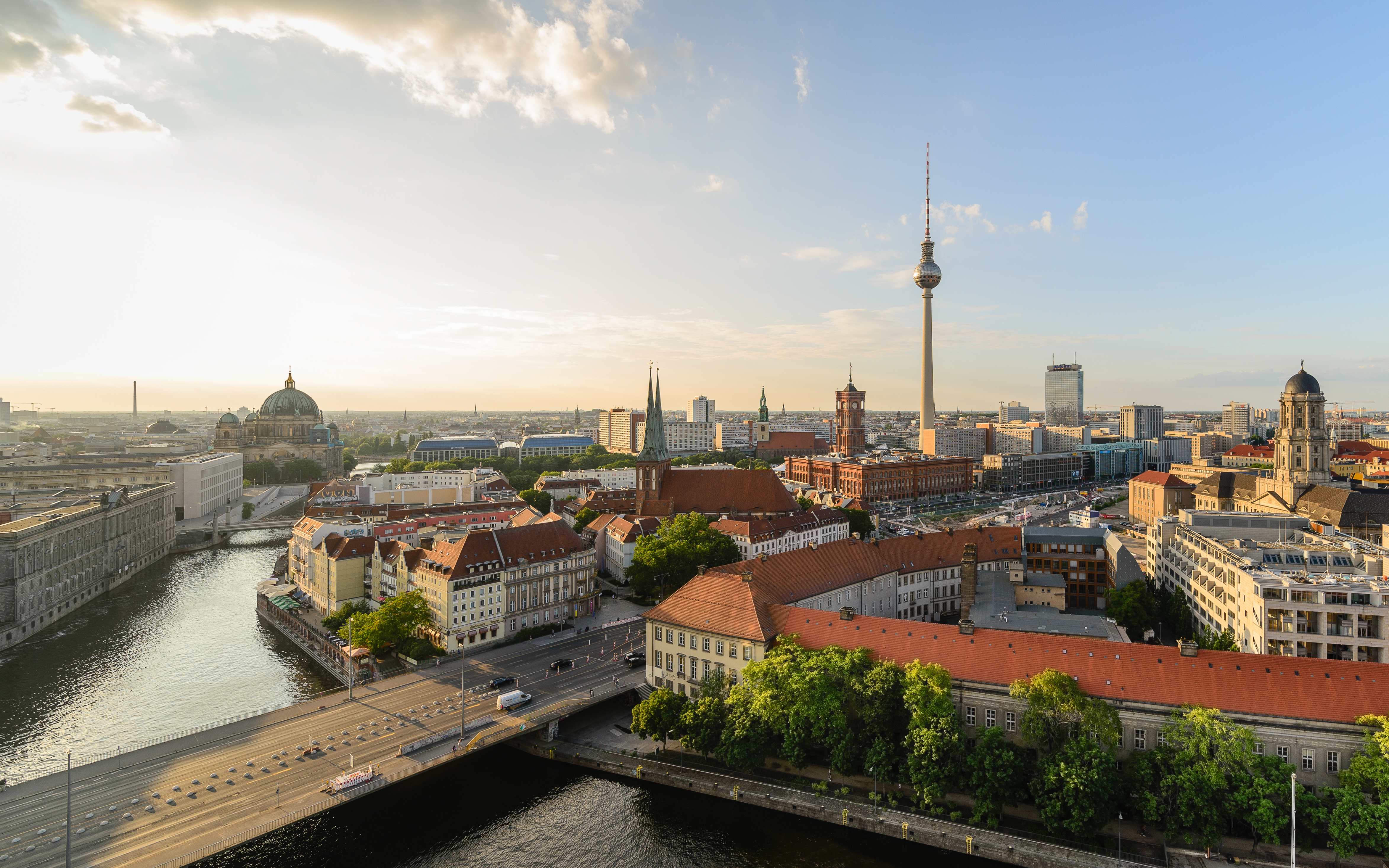
Berlin, Germany
Updated April 2026 · Places to Visit in Europe
Berlin is the city that refuses to be one thing. Stand at the Brandenburg Gate on a grey Tuesday morning and you are surrounded by 200 years of German history — the gate itself, the Bundestag dome above it, the Holocaust Memorial stretching away to the north. Walk five minutes east into the Hackescher Höfe courtyard and you are in a labyrinth of art galleries, vintage clothing shops, and bars playing electronic music at 11 in the morning. Cross the Spree to the east and you are in a city that was bombed, divided, and reunified within living memory — a city whose scar tissue is visible on every street, and whose response to that history has been to build something raw, experimental, and utterly unlike anywhere else in Europe. Berlin is not beautiful in the way that Vienna or Prague are beautiful. It is beautiful in the way that a person who has survived something significant is beautiful — complex, self-aware, occasionally difficult, and impossible to look away from.
The city sits at the heart of the North European plain, spread across the Spree and Havel rivers with an ease that belies the fact that it is one of the largest metropolitan areas on the continent — a city of 3.7 million people that has, in the 35 years since the Wall fell, reconstructed itself into a major European capital of art, technology, food, and nightlife. The East-West divide is still visible in the architecture — the wilful neglect of the East, the sleek renovation of the West — but the city has long since stopped being defined by it. Today, Berlin is a city of neighbourhoods, each with its own distinct character: the alternative energy of Kreuzberg, the bourgeois calm of Charlottenburg, the brutalist grandeur of Mitte, the Post-Soviet energy of Marzahn. This guide will help you find the right hotel, the best food, the essential sights, and a three-day itinerary that gives you a genuine feel for a city that always has more to offer than you expect.
Best Places to Stay
Berlin's hotel market has changed dramatically in the past decade. The city that once had a reputation for offering some of the worst accommodation in Europe has invested heavily in its hotel stock, and the results are evident across all price points. The key decision is neighbourhood — Berlin is large enough that where you sleep shapes your experience. Mitte puts you in the historic heart; Kreuzberg puts you in the cultural mix; Charlottenburg is quieter and more classical; Prenzlauer Berg has the best cafés and the youngest energy.
- Luxury: The Hotel Adlon Kempinski on Unter den Linden, directly opposite the Brandenburg Gate, is the most prestigious address in Berlin — a grand hotel that has hosted heads of state and celebrities since 1907, rebuilt after reunification and now operating at a level of service that matches the very best of the Kempinski brand. The rooms are large and classical, the breakfast is extraordinary, and the location is as central as it gets. For a more contemporary luxury, the The Ritz-Carlton Berlin at the eastern end of the Tiergarten occupies a sleek, glass-fronted building with one of the city's best spas and a location that puts Museum Island, the Sony Center, and the Brandenburg Gate within a ten-minute walk. The Regent Berlin on Charlottenstrasse in Mitte is a quieter, more understated choice — its rooms are decorated in warm contemporary style, its service is impeccable, and its location on one of the city's most charming streets puts you within easy reach of the Gendarmenmarkt and the Staatsoper. The Hotel de Rome on the Bebelplatz, housed in a former bank building from 1889, is one of the most atmospheric luxury properties in the city — its old banking hall has been converted into a bar of genuine grandeur, and the rooftop terrace looks directly onto the dome of the Berliner Dom.
- Mid-range: The Michelberger Hotel in Friedrichshain is the canonical Berlin design hotel — a converted warehouse with high ceilings, exposed concrete, and a communal atmosphere that makes it popular with musicians, artists, and the kind of traveller who wants their hotel to have a personality. The neighbourhood is one of the most vibrant in the city — a short walk from the Boxhagener Platz Sunday market and the Simon-Dach-Strasse restaurant row. The nhow Berlin on the Stralauer Allee overlooking the Spree is a music-themed hotel with instruments in the lobby, recording studios on the upper floors, and a rooftop bar with views across the river to the Ostbahnhof and beyond. For a more classical mid-range experience, the Arcotel John F in Mitte occupies a converted government building near the Gendarmenmarkt, offering spacious rooms, excellent breakfast, and a location that works well for both sightseeing and business. The Hampton by Hilton Berlin City West near the Kurfürstendamm is a reliable, well-priced option in a quiet residential area with good transport connections — a sensible choice if you want comfort and practicality over atmosphere.
- Budget: Berlin remains one of the more affordable European capitals for accommodation, and the budget scene has improved significantly with the arrival of several excellent hostels and hostels-hybrid properties. PLUS Berlin in Friedrichshain is a large, well-run hostel with both dorms and private rooms, a rooftop bar with views across the Spree, and a location in one of the city's most interesting neighbourhoods. The Circus Hostel near the Rosenthaler Platz in Mitte is a small, well-managed hostel in a quiet residential street — its bar is popular with both guests and locals, and the location puts the Hackescher Höfe, the Hackescher Markt, and the nightlife of the surrounding streets within easy reach. The EastSeven Berlin Hostel in Prenzlauer Berg is a quieter, more residential option — the kind of hostel where you actually sleep well, followed by a breakfast that will set you up for a day of sightseeing. For private rooms at hostel prices, the Meininger Hotel Berlin Central Station near the Hauptbahnhof offers clean, modern rooms in a convenient location at a price that undercuts equivalent hotels significantly.
Best Places to Eat
Berlin's food scene has undergone a transformation in the past twenty years that is difficult to overstate. The city that was once famous for nothing more distinctive than currywurst and döner kebab now has one of the most interesting restaurant cultures in Europe — a product of the city's large immigrant communities, its young creative population, and the relatively low cost of opening a restaurant in a city where rent, while rising, remains manageable by London or Paris standards. The result is a food scene of extraordinary range and energy, where you can eat world-class fine dining and extraordinary street food within a few blocks of each other.
- Fine Dining: Berlin's fine dining scene is concentrated in Mitte and Charlottenburg, with a scattering of interesting options in Kreuzberg and Neukölln. Facil near the Sony Center holds two Michelin stars and occupies a glass pavilion in the courtyard of the Volkswagen Group's HQ — its contemporary German cuisine is precise and technically accomplished without feeling cold. For a more intimate experience, Restaurant Tim Raue in Charlottenburg holds two Michelin stars under chef Tim Raue, whose kitchen produces Asian-influenced German cuisine of genuine originality — the wasabi pea-crusted scallops are canonical. Nobelhart & Schmutzig in the Friedrichstadt district is the most committed fine dining experience in Berlin — a single 20-seat dining room where chefowner Bobby Schindler cooks a daily tasting menu from local ingredients sourced from within 100 kilometres of the city. The restaurant holds one Michelin star and one Green Star, and its philosophy of absolute regional sourcing gives it a character unlike any other fine dining experience in Germany.
- Traditional German: The classic Berlin culinary experience is the Gasthaus — a traditional pub-restaurant serving generous portions of German classics at prices that feel impossibly reasonable by London standards. Zur letzten Instanz in Mitte claims to be the oldest continuously operating restaurant in Berlin, dating from 1621, and its Weisses (wheat beer), its Wiener Schnitzel, and its Eisbein (pickled pork knuckle) are all reliably excellent. In the Prenzlauer Berg neighbourhood, Max und Moritz occupies a beautifully restored 19th-century brewery with a two-floor restaurant serving contemporary interpretations of Berlin classics — the spinach spätzle is as good as any German comfort food you will find, and the back courtyard is one of the most pleasant outdoor eating spaces in the city. For something more working-class and authentic, the Zur Haxe near the Hackescher Markt serves the best Haxe (roasted pork knuckle) in the area at communal tables, surrounded by walls covered in old photographs and old Berlin memorabilia. The Bierhof chain has several locations across the city and offers reliable German food in a no-nonsense format — the schnitzel is consistently excellent and the beer selection is strong.
- Currywurst and Street Food: No visit to Berlin is complete without eating currywurst at least once — the city's signature street food, a grilled pork sausage sliced and dressed with a ketchup-curry sauce that was invented in the city in 1949 and has since become its most recognisable culinary export. Curry 36 on the Mehringdamm in Kreuzberg is the most celebrated currywurst stand in the city — a small hut that has been doing brisk business since 1983 and whose sauce recipe is a closely guarded secret. Konnopke's Imbiss below the U-Bahn platform at the Eberswalder Strasse stop in Prenzlauer Berg is an institution — the original currywurst stand has been operating since 1930 and moved underground when the elevated train line was built over it in the 1960s, making eating currywurst on a U-Bahn platform one of Berlin's more surreal culinary experiences. For the best döner kebab in the city (the other great Berlin street food), Mustafa's Gemüse Kebap in Kreuzberg is the canonical address — a tiny stand near the Görlitzer Park that consistently appears on lists of the best döner in the world despite being nothing more than a timber hut with a grill.
- Turkish and Multicultural: Berlin has one of the largest Turkish communities outside Turkey, and the impact on the city's food culture is visible everywhere. The Turkish Market at the Maybachufer canal in Neukölln runs every Tuesday and Friday and is one of the most colourful and energetic food markets in Europe — vendors sell everything from fresh spices and olives to grilled lamb and Turkish pizza (lahmacun), and the atmosphere is extraordinary. Imren Grill in the Schöneberg district is one of the best Turkish restaurants in the city's genuine Turkish neighbourhood — the meze selection is vast, the lamb is cooked over charcoal, and the flatbread arrives hot from the clay oven. For something more contemporary and Berlin-specific, the Markthalle Neun in Kreuzberg hosts a Street Food Thursday market that has become one of the city's most popular food events — 20-plus vendors selling everything from Korean tacos to Venezuelan arepas to Nigerian jollof rice, all consumed at communal tables in a beautiful 19th-century market hall.
Best Sites to Visit
Berlin's sights are spread across a wide city, and the historical narrative — from the Brandenburg Gate to the Wall, from the Nazi era to the Cold War division to reunification — provides a framework that makes even the most dispersed attractions feel coherent. But Berlin is not only a historical city. Its contemporary cultural scene — world-class museums, experimental theatre, electronic music clubs in former power stations — is as compelling as anything in Europe.
- The Brandenburg Gate and Pariser Platz: The Brandenburg Gate is Berlin's most recognisable landmark — a neoclassical triumphal arch built between 1788 and 1791 on the orders of Frederick the Great, standing at the western end of the Unter den Linden boulevard and marking the edge of the former Tiergarten. During the Cold War, it stood in the Death Strip between East and West Berlin and became the symbol of German division; since 1989 it has been the symbol of reunification. The gate is best seen early in the morning when the square is almost empty, or at night when it is illuminated against the dark sky. The Pariser Platz behind it is lined with embassies and historic hotels — the Hotel Adlon on the southeastern corner, the French and American embassies — and provides a formal urban room of genuine elegance. Walk north from here to experience the Holocaust Memorial — a field of 2,711 concrete stelae of varying heights on a slightly sloping site, designed by Peter Eisenman and opened in 2005. It is a space that resists interpretation, and that resistance is its point.
- The Berlin Wall and Cold War Sites: The Berlin Wall existed from 1961 to 1989 — 155 kilometres of concrete, barbed wire, watchtowers, and death strip dividing a city and a country. Its legacy is visible across the city, though much of the Wall itself has been demolished. The most important surviving section is the Berlin Wall Memorial on Bernauer Strasse, where a section of the Wall has been preserved alongside an outdoor exhibition, a documentation centre, and a memorial to those who died trying to cross. The documentation centre here is essential context — it explains the history of the Wall, the escape attempts, and the lives lived in its shadow. The East Side Gallery on the Spree River bank east of the Ostbahnhof is the longest remaining section of Wall — 1.3 kilometres of murals painted by artists from around the world in the months after the Wall fell. The most famous image is the fraternal kiss between Soviet leader Leonid Brezhnev and East German leader Erich Honecker, painted by Russian artist Dmitri Vrubel. The Topography of Terror on the Niederkirchnerstrasse is built on the site of the former Gestapo and SS headquarters — an outdoor and indoor exhibition that documents the history of Nazi terror in the city, directly adjacent to a surviving section of the Wall itself.
- Museum Island (Museumsinsel): The Museum Island in the Spree River between the Spittelmarkt and the Lustgarten is one of the most extraordinary concentrations of museum architecture in the world — a cluster of five museums (soon to be six with the Humboldt Forum) on a small island that was declared a UNESCO World Heritage Site in 1999. The Pergamon Museum holds the massive reconstructed ancient structures — the Ishtar Gate of Babylon, the Market Gate of Miletus, the Aleppo Room — that make it one of the most visited museums in Germany. The Neues Museum, reopened in 2009 after a decade of restoration by David Chipperfield Architects, holds the Egyptian collection and the famous bust of Nefertiti alongside the prehistoric and early history collections. The Altes Museum holds the classical antiquities collection in a building designed by Karl Friedrich Schinkel in 1830 — one of the most beautiful neoclassical buildings in Europe, with its pantheon-style rotunda still intact. The Bode Museum holds the sculpture and Byzantine art collections, and its dome is one of the landmarks of the Berlin skyline when viewed from the government quarter across the river. Allow at least half a day on Museum Island — the collections are dense and the buildings themselves are worth the visit.
- Government Quarter and Reichstag: The area around the Reichstag Building — the seat of the German parliament — is the heart of Berlin's reborn government quarter. The Reichstag itself is best known for Sir Norman Foster's 1999 glass dome, which sits above the debating chamber and offers 360-degree views over the city through a spiral walkway. Entry is free but must be pre-booked online — the dome is at its most dramatic in the evening, when the city lights begin to appear below you and the view is genuinely breathtaking. The Bundestag itself is a working parliament, and the atmosphere of visiting a building that is the centre of German democratic life adds a dimension that a mere sightseeing dome would lack. The government quarter has expanded east along the Spree since reunification, with new embassies, ministries, and the Bundeskanzleramt (Chancellery) building creating a new urban landscape. The walk from the Reichstag east along the Spree toward the Fernsehturm passes through an extraordinary concentration of contemporary government architecture — the lowest point of the skyline here is the restored Berlin Cathedral, the highest is the television tower.
- Historic Squares and Streets: The Gendarmenmarkt is Berlin's most beautiful square — flanked by the German Cathedral, the French Cathedral, and the Konzerthaus, all built in the early 19th century and forming one of the most elegant urban ensembles in Europe. The square is surrounded by excellent restaurants and is the site of Berlin's main Christmas market in December. The Potsdamer Platz was, in the 1920s, one of the busiest intersections in Europe — and then it disappeared behind the Wall for 30 years. Its reconstruction after reunification was controversial: the glass-and-steel towers designed by Renzo Piano, Hans Kohl, and Helmut Jahn created a hyper-modern urban quarter on a site with no historical precedent, and the result is both impressive and slightly soulless. The Sony Center at its heart is one of the most successful pieces of urban design in post-war Europe, and the morning light in the central atrium — a space that opens to the sky but is sheltered by a steel and glass roof — is one of the most photographed spots in the city.
- Palaces and Gardens: The Schloss Charlottenburg (Charlottenburg Palace) in the western suburb of Charlottenburg is the most significant surviving Prussian palace in Berlin — a vast Baroque complex built at the end of the 17th century and expanded through the 18th century, with a New Wing (Neuer Flügel) added in the mid-19th century that now houses the Museum of Decorative Arts. The palace gardens are free to enter and are among the most pleasant green spaces in the city — the formal French garden to the west, the Mausoleum with its beautiful Hasselhorst paintings, the Belvedere tea house. In the centre, the Schlossgarten (Palace Garden) running south from the Tiergarten to the Spree is one of Berlin's principal parks — the Siegesäule (Victory Column) at its centre, a 67-metre column commemorating Prussian military victories, is reached by a long pedestrian bridge flanked by bronze lions and offers views over the park and the government quarter. The Schlosspark Neukölln in the Neukölln district is a lesser-known but equally beautiful formal garden — quieter and more local in character.
- Neighbourhoods: Kreuzberg, straddling the border between the former East and West, is Berlin's most culturally complex neighbourhood — home to the Turkish community, to alternative communities, to some of the city's best nightlife and food. The Görlitzer Park on the site of a former freight yard is a vibrant urban park, and the streets radiating from it are lined with some of the best restaurants and bars in the city. The Oranienstrasse is one of Berlin's great urban streets — 600 metres of bars, shops, restaurants, and galleries that has been one of the city's defining nightlife streets since the 1970s. Prenzlauer Berg, immediately north of the centre, was the first neighbourhood to be rehabilitated after reunification and has become the city's most family-oriented district — its streets are lined with beautiful 19th-century apartment buildings, excellent cafés, and the Mauerpark Sunday market, which is one of the best outdoor markets in the city. The Kastanienallee is one of the best streets in Berlin for café culture — follow it east from the Eberswalder Strasse U-Bahn and you will find some of the best coffee in the city. Neukölln, south of Kreuzberg, is Berlin's newest cultural frontier — a working-class district that has attracted artists, designers, and the food scene that arrived with them, making it one of the most interesting areas to eat, drink, and explore in the city.
Sample 3-Day Itinerary
Berlin rewards depth over speed. The city is too large and too complex to be absorbed in a rushed two-day checklist, and the following itinerary is designed to let you understand different aspects of the city across three days — history, culture, neighbourhood life — without exhausting you. Berlin is also best experienced on foot and by bike; the public transport system is excellent but the city reveals itself differently when you walk it.
Day 1: Pariser Platz, Government Quarter, and Museum Island
- Morning: Start at the Brandenburg Gate at 9 AM — arrive before the tour buses and walk north through the Holocaust Memorial, then west into the Tiergarten, following the central walk to the Siegesäule (Victory Column) for views across the park. From there, walk east along the Spree to the Reichstag for your pre-booked dome visit. After the dome, walk east along the river past the Bundeskanzleramt and the new government quarter to the Museum Island — begin with the Pergamon Museum, focusing on the major reconstructions: the Ishtar Gate, the Market Gate of Miletus.
- Afternoon: Walk north from Museum Island to the Berliner Dom (Berlin Cathedral) and the Lustgarten — a formal public square whose lawn is a popular spot in good weather. Cross to the Neues Museum for the Egyptian collection and the bust of Nefertiti. From here, walk north into Mitte and the Gendarmenmarkt, Berlin's most elegant square, for a late afternoon coffee or lunch — the Facil restaurant pavilion is nearby, or the Markthalle Neun for something more informal.
- Evening: Have dinner in the Nikolaiviertel — the oldest surviving neighbourhood in Berlin, rebuilt after the war but with some genuine medieval streets surviving. The Zur letzten Instanz on the Nordecke is the most atmospheric option. After dinner, walk west along the Spree to the Oberbaumbrücke — the bridge connecting Kreuzberg to Friedrichshain that was famous as a crossing point during the Cold War. On the Friedrichshain side, the Simon-Dach-Strasse is one of Berlin's most lively restaurant streets, packed end-to-end with bars and restaurants of every variety.
Day 2: Berlin Wall, Kreuzberg, and Alternative Culture
- Morning: Take the U-Bahn to the Bernauer Strasse station and walk to the Berlin Wall Memorial — the outdoor exhibition, the preserved Wall section, and the documentation centre give essential context for understanding the Wall's history. Walk south from here to the Topography of Terror on the Niederkirchner Strasse, which documents the history of the Nazi terror state in the building that was the Gestapo headquarters. From there, walk south into the Jüdisches Museum Berlin (Jewish Museum Berlin) — Daniel Libeskind's extraordinary building, whose architecture itself is a meditation on the experience of Jews in Germany, is one of the most important museum experiences in Europe. Allow two hours.
- Afternoon: Take the U-Bahn to the Görlitzer Park in Kreuzberg — spend time in the park, then walk north along the Oranienstrasse, stopping at the Turkish Market on the Maybachufer canal (Tuesdays and Fridays) if it is the right day. For something else entirely, explore the Kreuzberg food scene — Mustafa's Gemüse Kebap for döner, or Bonanza Coffee on the璞 Espresso bar that is one of the most celebrated in Europe. In the late afternoon, take the U-Bahn or walk to the East Side Gallery — the 1.3 kilometres of preserved Wall covered in murals is best seen in the afternoon light.
- Evening: Return to Kreuzberg for dinner — the area around the Graefestrasse and the Kottbusser Tor is packed with excellent restaurants across every cuisine. After dinner, experience Berlin's nightlife — the neighbourhood is famous for it. For something classic, the Wassersportverein on the Spree is a boat bar that is one of Berlin's great summer drinking spots; for something more intense, take the S-Bahn to the Ostbahnhof and walk to one of the former industrial clubs in the Friedrichshain area, where the warehouse parties and techno clubs that made Berlin famous continue to operate in spaces that feel genuinely underground even as they have become internationally famous.
Day 3: Charlottenburg, Culture, and Local Life
- Morning: Take the S-Bahn to the Zoologischer Garten and walk south through the western city centre — the Kurfürstendamm is Berlin's principal shopping street, flanked by the Kaiser Wilhelm Memorial Church, whose shattered spire is one of the most potent war memorials in Europe. From there, walk south to the Schloss Charlottenburg — allow at least two hours to visit the palace, the gardens, and the Museum of Decorative Arts. The Schloss Charlottenburg gardens are free to enter and are beautiful in the morning, before the crowds arrive.
- Afternoon: Have lunch in the Charlottenburg neighbourhood — the side streets around the Savignyplatz have an excellent range of restaurants and cafés. In the afternoon, take the U-Bahn to the Mauerpark in Prenzlauer Berg — if it is a Sunday, the flea market there is one of the best in the city. Otherwise, explore the neighbourhood — the streets around the Kastanienallee are lined with excellent independent shops, cafés, and neighbourhood bars.
- Evening: For your final evening in Berlin, have dinner in Prenzlauer Berg — the neighbourhood has one of the best concentrations of restaurants in the city, from neighbourhood bistros to serious fine dining. After dinner, walk north to the Kollwitzplatz and the Wassertorplatz area, where the street life on a Friday or Saturday night is among the most pleasant in the city. Alternatively, take the S-Bahn to the Westhafen and walk along the canal to one of the evening boat bars that operate in the summer months, offering drinks on the water as the sun goes down over the city.
Getting There & Getting Around
By Air: Berlin has two major airports. Berlin Brandenburg Airport (BER), located 18 kilometres southeast of the city centre in the Schönefeld district, opened in 2020 after years of delays and now handles all commercial flights. It has two terminals (T1 and T2) connected by a people mover. The Flughafen-Express (FEX) runs from BER to Berlin Hauptbahnhof (central station) every 30 minutes, taking about 30 minutes. The S-Bahn S9 also connects BER to the city centre, running via Alexanderplatz and Friedrichstrasse. Taxis from BER to the city centre cost around €40–€50. Berlin's older Tegel Airport (TXH) was closed in 2020 when BER opened. Note that the Ryanair-style low-cost carriers often use the smaller Berlin Brandenburg Terminal 5 (the former Schönefeld building), which requires a separate shuttle bus from the main terminal area.
By Train: Berlin is a major hub on the European rail network, with high-speed ICE services connecting to Hamburg (1h 45m), Munich (4h), Frankfurt (3h 30m), and Cologne (3h 45m). International services connect to Prague (4h 30m), Vienna (9h), Amsterdam (6h 15m), and Warsaw (5h 30m). Berlin's main long-distance station is Berlin Hauptbahnhof (central station), a massive glass-and-steel building opened in 2006 that handles the majority of ICE and international services. A second major station, Berlin Ostbahnhof, handles some international services and regional trains to the east. The Berlin Sudkreuz (South Cross) station handles services to the south and southwest. For cross-city travel within Berlin, the S-Bahn (surface rail) and U-Bahn (underground) networks are comprehensive; the Ringbahn (circular line) circling the inner city is particularly useful for moving between districts without going through the centre.
Getting Around the City: Berlin's public transport network is one of the best in Europe — a combination of the U-Bahn (underground, 10 lines), the S-Bahn (surface rail, 16 lines including the circular Ringbahn), trams, and buses that can take you to virtually any point in the city. A single journey costs €3.00 with the BVG (Berlin Transport Authority) app or a chip card, or €3.40 in cash on buses. The most useful ticket for visitors is the Tagesticket (day ticket) at €8.80, valid for unlimited travel on all BVG transport in the AB zones (covering the inner city and most tourist destinations) for one day. The 7-Tage-Karte (7-day travel card) at €36.20 is better value for stays of a week or more. The Berlin WelcomeCard (available from tourist offices and tobacconists) offers travel plus discounts on major museums and attractions. Berlin is also an excellent cycling city — a flat terrain, an extensive network of bike lanes, and bike rental companies everywhere make cycling one of the most pleasant ways to explore the city. Taxis are relatively cheap by European standards (a short journey within the city costs around €10–€15), and Uber and Bolt operate throughout the city.
Travel Tips & Practical Info
- Best time to visit: Late April to June and September to October are the optimal periods — the weather is mild (15–24°C), the city is vibrant, and the outdoor life that makes Berlin special (park culture, canal-side drinking, open-air cinema) is in full operation. The city is at its most atmospheric in June, when the long days and the outdoor festivals create an energy that is difficult to describe. July and August are warm (22–30°C) and the most popular with visitors; the city is busy and accommodation prices rise, but the summer programme of open-air events and club nights is at its peak. November to March is the cold season — temperatures of -5°C to 5°C, grey skies, and short days. This is when Berlin's indoor culture comes into its own: the clubs, theatres, museums, and the extraordinary café culture of neighbourhoods like Prenzlauer Berg and Kreuzberg. December brings Christmas markets (the most atmospheric is in the Gendarmenmarkt) and a general cosiness that makes the cold bearable.
- Cost: Berlin has become significantly more expensive since reunification but remains one of the more affordable major European capitals. A modest daily budget — hostel or budget hotel, breakfast at a Café, lunch from an Imbiss or market, dinner at a neighbourhood restaurant, public transport, and one museum or gallery — runs to around €90–€130 per person per day. Budget travellers can manage on €50–€80 per day staying in hostels, eating at Imbiss stands and döner shops, and limiting paid attractions (many museums are free on the first Sunday of the month). Luxury travellers should budget €250+ per day — the luxury hotel sector has expanded significantly and competitive rates can be found mid-week. Eating out is good value by European standards: a substantial meal at a good neighbourhood restaurant costs €15–€25, and the street food scene means you can eat very well for €5–€10 per meal.
- Language: German is the official language of Berlin and the rest of Germany. English is spoken widely across the city's tourism, hospitality, cultural, and technology sectors — particularly among young people and in the central neighbourhoods. In more traditional or working-class contexts — family-run restaurants, local markets, older residential neighbourhoods — English becomes less reliable, and a few words of German are always appreciated. Useful phrases: Bitte (please), Danke (thank you), Entschuldigung (excuse me), Ich verstehe nicht (I don't understand), Die Rechnung, bitte (the bill, please). Berlin has a local dialect (Berlinisch) that can be quite different from standard German — you may hear it in neighbourhood bars and restaurants, but standard German will always be understood.
- Tipping: Tipping in Berlin follows German conventions — rounding up or adding 5–10% for good service in restaurants, rounding up for taxis, and small amounts (€1–€2) for bar service, hotel porters, and tour guides. There is no expectation of tipping in fast-food contexts or at market stalls. The phrase to use is Stimmt so (keep the change) when paying cash, which signals that you are happy with the service and do not need change returned.
- What to pack: Berlin's climate is continental — cold winters, warm summers, and relatively unpredictable weather in the shoulder seasons. In summer, layers are important: the city can be warm (25–32°C) but changeable, and air-conditioned restaurants and museums can feel cold after a hot afternoon outdoors. Comfortable walking shoes are essential — the city is best explored on foot, and the cobblestones and uneven paving of the older neighbourhoods punish inadequate footwear. In winter, a warm coat, a scarf, and waterproof shoes are necessary — the temperature regularly drops below freezing from November through March, and the wind off the surrounding plains can be biting. A universal power adaptor (Type F, two-pin grounded) is needed for German sockets. Berlin is one of the most fashionable cities in Europe — its street style is taken seriously, and visitors who care about such things will find the city's creative atmosphere infectious.
- Safety: Berlin is generally a safe city, but petty crime — particularly pickpocketing — is a concern on the U-Bahn and S-Bahn, in crowded tourist areas, and at major attractions. The areas around the Brandenburg Gate, Alexanderplatz, and the Museum Island are the main hotspots; the U-Bahn lines 1 and 2 between Wittenbergplatz and KaDeWe are also noted for pickpocket activity. Violent crime is rare. Berlin has a large homeless population and an active open-drugs scene in some areas (particularly around the Kottbusser Tor in Kreuzberg) — this is generally not threatening but can feel uncomfortable. At night, the main club areas (Berghain, Tresor, Watergate) are safe but can be intimidating if you are not used to the culture of Berlin's techno scene. Emergency services in Germany are reached by dialling 112; for police non-emergency, dial 110.
Upcoming Events
- Fête de la Musique Berlin — Warm-Up Week — Mon 8 – Sun 14 June, city-wide. The world's biggest free music festival hits June 21st, but Berlin starts early. Expect pop-up concerts in parks, courtyard gigs in Kreuzberg and Neukölln, and impromptu street performances building toward the main day. Follow @fetedelamusiqueberlin for locations.
- Outdoor Cinema Summer Season — Ongoing through August, Freiluftkino Wilmersdorf, Kulturbrauerei, Sommergarten. Berlin's beloved open-air cinema season is in full swing — classic films, cult favourites, and premieres under the stars. Bring a blanket and a bottle. Programmes at freiluftkino.de.
- Museum Island Late Night — Fri 12 June, Museumsinsel. The Pergamon, Neues, Altes, and Bode museums extend hours until 10 PM with special evening programmes, guided tours, and live music in the courtyards. The island is especially atmospheric at dusk when the floodlit facades reflect in the Spree.
- Karneval der Kulturen After-Party — Sat 13 June, various Friedrichshain and Kreuzberg venues. The world-f multicultural street festival has just passed (Whitsun weekend), but the after-parties continue into the following week. Club nights and world music events across the city's most vibrant neighbourhoods.
- Berghain / ://about blank Weekend Sessions — Fri 12 – Sun 14 June, Friedrichshain. Berlin's legendary techno temples continue their summer programme with resident and visiting DJs. Check Resident Advisor for line-ups and door policy updates.
Check visitberlin.de for the full weekly programme, or Resident Advisor for Berlin's club and electronic music scene.
Where to Next?
Berlin's central position in Northern Europe makes it an ideal base for exploring the region. The direct rail connections are particularly strong: a high-speed train north takes you to Hamburg in under two hours — the Hanseatic city on the Elbe with its distinctive harbour, the Reeperbahn nightlife district, and a food scene that has quietly become one of Germany's most interesting. East by rail, Prague is four and a half hours away — one of Europe's most beautiful cities, its Gothic and Baroque architecture lit dramatically along the Vltava River, and a beer culture that has to be experienced to be believed. For the most culturally coherent next step, consider the train southwest to Vienna — the Austrian capital is about nine hours by direct rail, passing through the landscapes of Saxony and Bohemia, and arriving in a city that is in many ways Berlin's more elegant, more resolved counterpart.
Upcoming Events
No major events this week.